
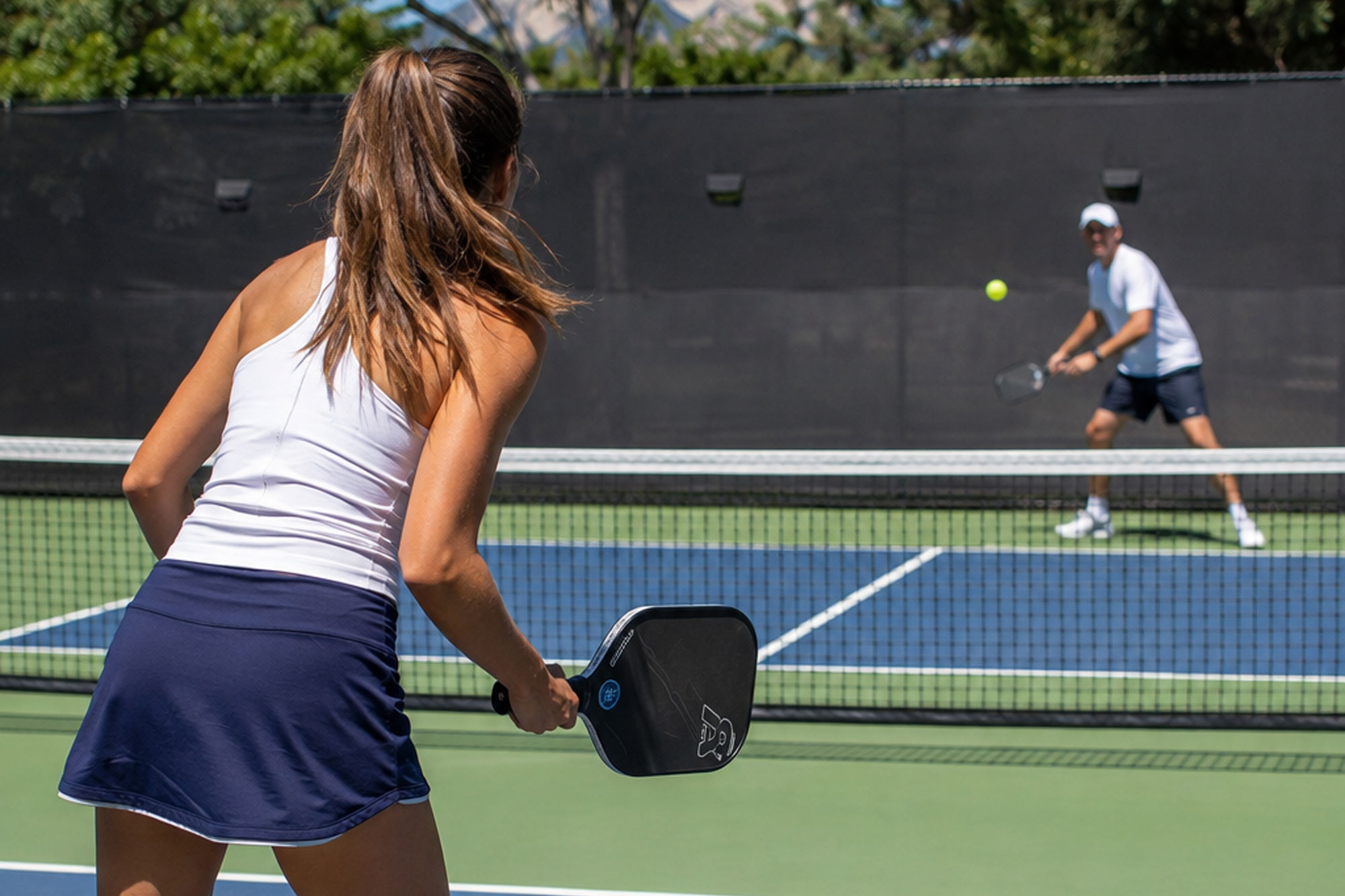
Why Singles Pickleball May Be the Best Workout
By Michael Falco
August 19, 2026 • 5 min read
ASK MOST PICKLEBALL PLAYERS which format they prefer, and doubles will almost always win.
It’s social, strategic, and easier on the body, making it the version most people play several times a week. But if your goal is to improve your fitness while becoming a stronger player, singles deserves a closer look.
Singles pickleball transforms the game into something entirely different. Every ball is yours to chase. Every shot requires movement. Every point becomes a combination of speed, endurance, strategy, and determination. There’s nowhere to hide and no partner to cover the next shot.
While singles demands more physically than doubles, it also rewards players with one of the most complete workouts available in racquet sports. From cardiovascular conditioning and muscular endurance to balance, coordination, and mental resilience, covering the court alone challenges nearly every system in the body.
For players looking to improve both their fitness and their game, singles may be the best training session they never planned.
A Heart-Pumping Cardiovascular Workout
The most obvious difference between singles and doubles is simple. You have the entire court to cover.
Without a partner sharing responsibilities, every serve return, passing shot, dink, and lob requires immediate movement. Short sprints replace standing. Recovery steps become constant. Even between points, players often remain physically engaged as they prepare for the next rally.
That nonstop movement naturally elevates the heart rate, creating an excellent cardiovascular workout. The repeated bursts of high-intensity effort followed by brief recovery periods closely resemble interval training, one of the most effective methods for improving cardiovascular fitness and endurance.
Unlike jogging on a treadmill or riding a stationary bike, however, singles pickleball keeps both the body and mind fully engaged. Players rarely think about the workout because they’re too focused on winning the next point.
Speed Begins with Better Footwork
Fitness in pickleball isn’t measured only by how fast you can run. It’s measured by how efficiently you move.
Singles constantly challenges players to accelerate, decelerate, change direction, recover to the middle of the court, and prepare for the next shot, often within just a few seconds. Those repeated movement patterns help develop agility while reinforcing proper footwork and court positioning.
As players improve, they often discover that movement becomes more economical. Instead of taking extra steps or reaching awkwardly for shots, they learn to position themselves earlier, maintain balance, and recover more efficiently after every swing.
Those improvements don’t just make players faster. They make them better movers.
Building Functional Strength
Although few people think of pickleball as strength training, singles demands significant muscular engagement throughout every match.
The lower body does much of the work. Legs generate power during serves, absorb force while stopping, stabilize lunges, and produce explosive movement toward wide shots. Over time, repeated court movement can help improve muscular endurance throughout the quadriceps, hamstrings, calves, and glutes.
The upper body contributes as well. Every drive, volley, overhead, and serve recruits the shoulders, arms, chest, and forearms, while the core provides stability during rotation and transfers power from the lower body through the paddle.
Unlike isolated weight-room exercises, singles develops functional strength through continuous athletic movement, requiring multiple muscle groups to work together rather than independently.
Improving Balance and Athletic Control
One overlooked benefit of singles pickleball is the constant demand for balance.
Players frequently stretch outside their base of support, recover from awkward positions, and transition immediately into the next movement. Those rapid adjustments challenge the body’s stabilizing muscles while improving coordination between the lower body and core.
Better balance translates well beyond pickleball. Everyday activities, recreational sports, and even injury prevention all benefit from improved body control and stability. The faster the game becomes, the more valuable balance becomes.
Elite players rarely appear rushed because their bodies remain under control, even while moving at full speed.
Training the Brain Along with the Body
Physical fitness is only half the challenge. Singles is equally demanding mentally.
Without a partner to help cover the court or discuss strategy between points, players must independently recognize patterns, anticipate opponents’ intentions, adjust tactics, and recover emotionally after mistakes.
Every rally becomes a series of rapid decisions. Should you attack or reset? Stay at the baseline or move forward? Pass crosscourt or down the line? Those decisions occur almost instinctively, strengthening concentration, anticipation, and problem-solving skills through repeated practice.
Mental fatigue often arrives long before physical exhaustion. Learning to remain composed while making good decisions under pressure is one of singles’ greatest training benefits.
Burning Calories Without Thinking About It
One reason many players embrace singles is that the exercise never feels repetitive.
The constant movement, changing rallies, and competitive nature of the game naturally encourage players to work harder than they often realize. Depending on body size, intensity, and match length, singles can become a significant calorie-burning activity while providing both cardiovascular exercise and muscular engagement.
Unlike traditional gym workouts, players are motivated by competition rather than repetition. Every sprint has a purpose. Every recovery step matters. Every rally creates another opportunity to move.
That combination often makes singles easier to sustain over time because the focus remains on the game rather than the workout.
Recovery Matters, Too
Because singles is considerably more demanding than doubles, recovery becomes an important part of training.
Hydration, proper nutrition, stretching, and adequate rest all help the body adapt to repeated high-intensity play. Strength training away from the court can also improve movement efficiency while reducing the likelihood of overuse injuries.
Players new to singles don’t need to jump immediately into multiple-hour sessions. Starting with shorter matches allows the body to gradually build endurance while reducing unnecessary fatigue.
Like any fitness program, consistency produces better results than occasional overexertion.
Recovery Matters, Too
Many workouts succeed physically but fail because people simply don’t enjoy them. Singles pickleball offers something different.
It challenges the cardiovascular system, strengthens muscles, develops balance and agility, sharpens decision-making, and provides the satisfaction of solving problems in real time. Perhaps most importantly, it disguises exercise as competition.
Players finish a demanding match tired, energized, and often eager to play another.
That’s one of the greatest strengths of singles pickleball. It doesn’t ask you to exercise for the sake of exercising. It asks you to compete, improve, and enjoy the process. The fitness gains simply become part of the reward.
Whether you’re preparing for tournament play, looking to improve your overall conditioning, or searching for an engaging alternative to traditional workouts, singles pickleball offers something few activities can match: a complete workout that leaves both your body and your mind wanting one more game. ●
About Michael Falco
Michael Falco is a Certified Master Trainer and ISSA Personal Trainer, an ISSA Nutritionist, and an FWI Certified Life Coach. He trains clients at LA Fitness in North Wales, PA, and writes the Health & Wellness column for The Pickleball Weekly.

Read the full magazine issue! Click below, then tap Full Screen for the best reading experience.
