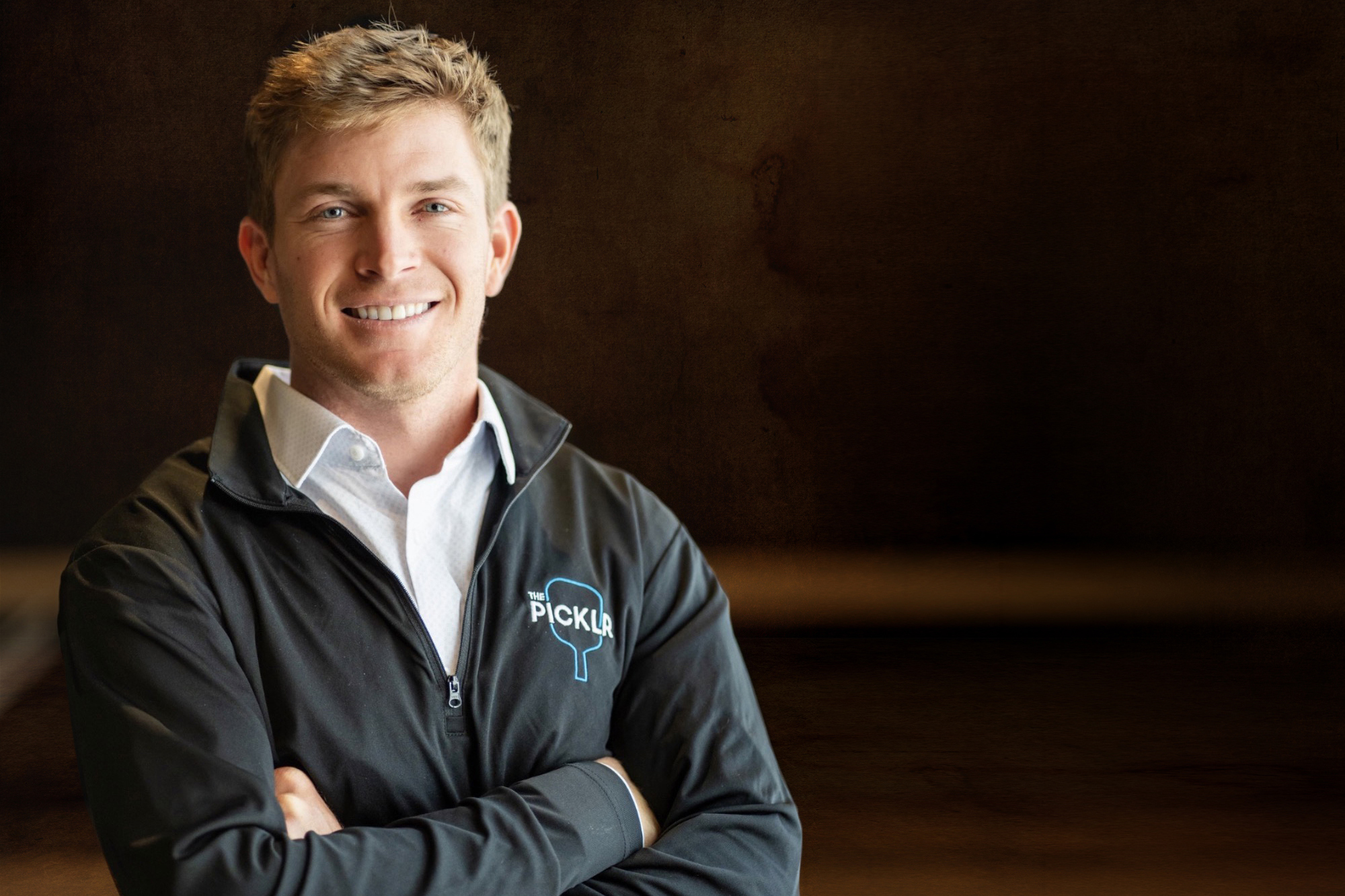
Kyle Yates: The Champion Who Helped Shape the Game
By Carl Foster • July 8, 2026 • 10 min read
The original GOAT
KYLE YATES WAS one of the most dominant men’s pickleball players from 2014 to 2018 and in recognition of his achievements was inducted into the Pickleball Hall of Fame in 2024 at the age of 29, becoming the youngest player ever to receive the honor.
I first interviewed Kyle for my Inside WORLD Pickleball TV Show television show during an APP event at Palmetto Dunes on Hilton Head Island in 2020, when he was still one of the top professional doubles players on tour. We also covered several of his instructional clinics, where he had earned a reputation as one of the sport’s premier teachers. Over the years he introduced his own signature paddle and clothing line and dabbled in the business side of pickleball while still competing.
In 2014 at age 19, Yates competed in his first USA Pickleball (USAPA) National Tournament and won gold in the men’s doubles 19+ division.
He won the grand slam of men’s pro doubles in 2016: the US Open, Tournament of Champions, and the USAPA Nationals. He won seven US Open pro doubles titles and was named World Pickleball Federation (WPF) #1 ranked doubles player in 2018.
Kyle spoke at our recent CourtReserve World Pickleball Conference in Naples where he was King of the Courts for years along with his longtime friend and partner, Dave Weinbach, his first Pro Doubles partner in 2014 winning their first US Open gold medal.
You can still find Kyle on the courts teaching and now owning his own indoor PICKLR clubs in Colorado. Here is my conversation with one of our WPC People Shaping Pickleball.

Looking Back and Looking Ahead
CARL: Kyle, you are recognized as the original GOAT of pickleball, winning seven U.S. Open Pickleball Championships and earning induction into the Pickleball Hall of Famer. Take us back to how you found pickleball and picked up your first paddle? Was tennis or another racket sport a big part of your early sports years?
KYLE: My uncle Mike introduced pickleball to me in high school. He also taught me tennis, squash, racquetball, etc. I dabbled in a lot of sports growing up like soccer, golf, table tennis, and of course a little tennis. I didn’t really take pickleball seriously until college when I was able to travel and play more tournaments out of state.
CARL: When did you feel like you wanted to turn professional and make pickleball a career? Who was your first coach or instructor you worked with?
KYLE: The first couple of years, I wasn’t sure if playing professionally was even possible. After the first US Open in 2016, and being recognized on CBS Sports, that’s when I realized I should take this pickleball thing more seriously.
I’ve never really had a “coach” but have worked with a few trainers over the years on various things, like Andy Gutierriez, Tony Giannoni, Eric Ah-Yuen, and even took a backhand lesson from the famous Coach Mo. I mostly learned shots from other players or just used my own creativity.
CARL: As one of the sport’s earliest champions, how have you seen the game change now from when you dominated in your prime from 2014 to 2018?
KYLE: Well, I’m still in my prime at 31, but the motivation to travel week after week has dwindled. The biggest change I’ve seen is just the speed of play. Paddle technology has allowed players to hit the ball harder and still keep it in. The chess aspect of the game unfortunately isn’t quite as important anymore as sheer speed and power.

CARL: Talk about your first paddle and how paddle technology has changed over the years, bringing more power to the game versus dinking. Has dinking taken a back seat in the Pro game and for new rec players coming in?
KYLE: My first paddle was a Pickleballinc champion graphite. It was about $40 and would only last a couple months. Then, I bought a Paddletek Bantam EX-L because of its warranty, and the rest is history as I went on to sign and play with Paddletek.
Dinking is still incredibly important at the higher levels, but nowadays everybody has power. Back in the early years, if you weren’t strong, you weren’t putting balls away. The pros always adjust, but at the amateur level it has shortened a lot of points which I don’t think is necessarily great for the sport at that level.
CARL: The prize money in the professional game has obviously changed with PPA and MLP now with contracted players. Do you feel this is good for the growth of pickleball? Over the years when you were traveling and playing tournaments, you had to give lessons, do clinics and work on endorsements to help you financially. Do you see that still happening with younger players trying to break in now and turn pro to cover the travel expenses?
KYLE: I do think it’s way too expensive these days. Tournament entry fees are skyrocketing and it’s hard to travel every week to different venues. These contracts have given a lot of players the opportunity to pursue this as a full-time career. I used to teach clinics or give lessons at every city I traveled to help cover the expenses. There wasn’t much prize money the first few years from 2015 to 2019. It’s exciting to see the growth but also it might be dangerous to give so many kids a potentially false expectation of going pro.

CARL: You have spoken at our World Pickleball Conference and are now active as a business owner, managing PICKLR facilities. What are your biggest challenges now being more involved on the business side of pickleball at still a young age?
KYLE: It’s just a different challenge but I’m enjoying it. When you’re the athlete, it’s easy to focus on just yourself. As a club owner, everything is about the members. Everything is for other people. I like that. I think I have a unique perspective into what players actually want from their clubs and I hope it shows at our clubs.
CARL: What is your reaction to the growth of pickleball internationally and do you see the Olympics in the future of the sport?
KYLE: I’m not surprised. The biggest hurdle for pickleball in the US has always been the name. In other countries, I don’t think it has the same connotation. The boom in Asia was to be expected, but I’m hopeful that it will catch on more in Europe, Africa, and South America to really give us a chance at Olympic possibilities in the near future.

CARL: Many athletes come out of retirement to test Father Time and compete again in their 40s like Martina Navratilova and now Serena Williams in tennis. Is pickleball a sport now that players in their 40s can compete with the next generation of new players?
KYLE: My biggest fear for the sport was that ex-pro tennis players would dominate. We haven’t seen that yet. We’re seeing these young, pickleball-specific skill sets rise to the top. If you’re a savvy veteran of the sport, like a Matt Wright, with the right skill set, then yes, I feel someone like that could still compete.
CARL: What are your thoughts about the rules of pickleball and the changes now with two governing bodies. USA Pickleball you grew up with, then most recently the UPA and PPA have instituted their own sets of rules. Is this good for the sport?
KYLE: I don’t think the rules have changed much over the years. A few details here and there but the game is still played relatively the same. The only real changes that these governing bodies need to be wary of so far are the paddle specifications.

CARL: What’s your vision for yourself over the next three to five years in pickleball and where do you see the direction of the sport growing in the USA and globally?
KYLE: The sky’s the limit. I’m more focused on grassroots efforts in Colorado and abroad, not getting too caught up in the “pro” side anymore. I think the amateur experience and recreational play is really what will keep driving the sport of pickleball.
CARL: Finally, who was your toughest opponent in singles when you were winning all your titles? Who was your favorite men’s and mixed doubles partners, or did you enjoy playing with multiple partners over the years?
KYLE: Over the years, I’ve had such a privilege to compete against so many great players. Players like Wes Gabrielsen, Marcin Rozpedski, Daniel Moore, Tyson McGuffin, then finally Ben Johns. Now there’s more and more coming out; it’s fun to see all the new styles and modern shot making.
I’ve always enjoyed playing with many different people, combining different styles. Some of my favorite partners over the years have been Andrei Daescu, Leigh and Anna Leigh Waters, Ben Johns, Simone Jardim, Matt Wright, and Dave Weinbach to name a few, but the list could go on and on and on.

The Legacy Continues
Today, Kyle’s influence extends well beyond tournament medals. As a club owner, instructor, mentor, and Hall of Famer, he continues helping shape the sport from the grassroots level up. While the professional game has become faster, more powerful, and more competitive than the ones he dominated a decade ago, his passion for growing pickleball remains unchanged. For one of the game’s earliest stars, the measure of success is no longer found only in championships, but in seeing the next generation discover the same sport that transformed his own life.
Few players have influenced pickleball’s early professional era as profoundly as Kyle Yates. His championship résumé secured his place in the Hall of Fame, but his commitment to coaching, club ownership, and growing the game may ultimately become his most enduring legacy. For one of pickleball’s original stars, the next chapter isn’t about adding more medals. It’s about helping shape the future of the sport he helped build.
About Carl Foster
Carl Foster is the Chairman of the World Pickleball Conference and the CEO of Foster Events Group, LLC, where he specializes in the production and management of high-profile sports and entertainment events. With over 50 years of experience in broadcasting, fundraising, and event leadership, he produces Inside WORLD Pickleball and serves as a lead moderator for industry summits. He is a central figure in the professionalization of pickleball, connecting technology experts, organizational leadership, and the player community to elevate the sport’s presence on a global scale.

Read the full magazine issue! Click below, then click on the X in the lower bar to enjoy a full screen view!