
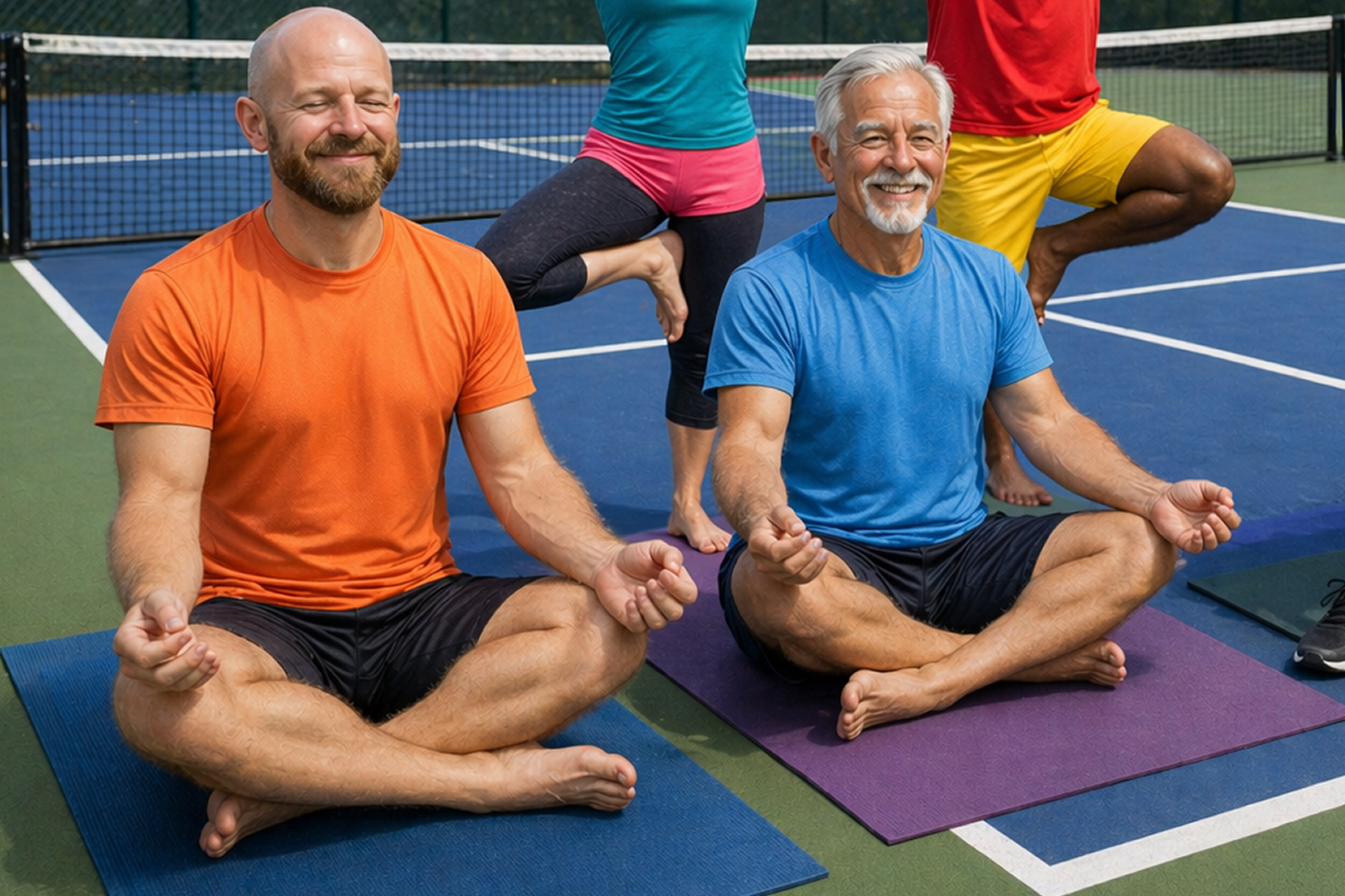
The Perfect Match: Why Players Turn to Yoga
By The Pickleball Weekly Health & Wellness Staff • Jan 7, 2026 • 3 min read
PICKLEBALL may be fast, social, and addictive, but it’s also demanding—espeically if you play frequently. Quick lateral movement, repeated lunging, overhead shots, and long rallies place real stress on hips, knees, shoulders, and the lower back. As more players log multiple sessions a week, many are discovering that improving their game isn’t just about drilling dinks or refining footwork. It’s about how they prepare their bodies and how they recover. That’s where yoga comes in.
Once viewed as a recovery-only practice, yoga has become a strategic tool for pickleball players of all ages and skill levels. From injury prevention to sharper balance at the non-volley zone, yoga is quietly reshaping how players stay on the court longer and play better.
Why Yoga Works So Well for Pickleball
Pickleball is a sport of contrasts: explosive starts and stops paired with patience and finesse. Yoga supports that balance by addressing the very things pickleball challenges most—mobility, stability, breath control, and mental focus.
Unlike static stretching, yoga builds active flexibility. Players don’t just become more flexible; they gain strength and control through expanded ranges of motion. That matters when reaching for a wide dink, recovering from a deep lunge, or rotating through a powerful serve.
Better Balance at the Kitchen Line
Balance is everything in pickleball, especially during fast hands exchanges at the net. Many yoga poses, such as single-leg balances and slow transitions, train the stabilizing muscles in the ankles, knees, hips, and core. For pickleball players, this translates directly to:
• More stable volley positioning • Faster recovery after reaching shots • Fewer missteps leading to falls or awkward landings.
As players age, balance becomes even more critical. Yoga helps preserve proprioception, the body’s awareness of where it is in space, which can decline over time without intentional training.
Stronger, More Resilient Joints
One of the most common complaints among pickleball players is joint pain, particularly in the knees, hips, shoulders, and elbows. Yoga strengthens the muscles around those joints, reducing strain during play.
Shoulder mobility poses support smoother overhead motion and reduce the risk of rotator cuff issues. Hip-opening sequences ease tightness that can otherwise lead to knee and lower-back pain. Gentle spinal work supports rotation and posture, helping players stay upright and responsive during long rallies. The result isn’t just fewer aches. It’s confidence in movement.
Faster Recovery, Fewer Injuries
Pickleball injuries often come from overuse rather than impact. Tight muscles, limited mobility, and poor recovery create the perfect conditions for strains and inflammation.
Yoga encourages circulation, hydration of connective tissue, and nervous system recovery. Even short post-play sessions can help flush soreness and restore range of motion. Many players find that incorporating yoga just two or three times a week significantly reduces post-match stiffness and next-day fatigue. It’s not about replacing strength training or conditioning. It’s about making those efforts sustainable.
Breathing, Focus, and the Mental Game
Pickleball is as mental as it is physical. Momentum swings quickly, points are short, and frustration can creep in fast. Yoga’s emphasis on controlled breathing and present-moment awareness offers players a powerful advantage.
Learning to regulate breath under effort helps players:
• Stay calm during long rallies • Reset quickly after missed shots • Maintain focus during tight games.
That same breath control translates on court, especially during serves, returns, and pressure points.
Yoga as a Warm-Up, Not Just Cool-Down
Many players think of yoga only as something done after play, but it can be just as valuable beforehand. A short, dynamic yoga-based warm-up increases joint lubrication, activates stabilizing muscles, and prepares the body for quick movement without fatigue.
Pre-play yoga doesn’t need to be slow or meditative. When done with intention, it becomes a performance primer— loosening hips, waking up shoulders, and engaging the core before the first serve.
A Practice That Grows With You
Perhaps yoga’s greatest benefit is its adaptability. Whether you’re a competitive tournament player or a social rec player who plays three mornings a week, yoga meets you where you are.
It scales with age, injury history, and fitness level. It complements pickleball rather than competing with it. And it reinforces something many players discover over time: longevity in pickleball isn’t just about playing more. It’s about taking care of the body that plays.
The Takeaway
Pickleball and yoga may seem like opposites at first glance; one fast and reactive, the other slow and deliberate. In reality, they’re perfectly aligned.
Yoga doesn’t just help pickleball players stretch better. It helps them move smarter, recover faster, stay focused, and remain on the court doing what they love.
For players looking to elevate their game without adding more wear and tear, the path forward may start not with another drill, but with a mat.
The Pickleball Weekly Health & Wellness Staff covers health, fitness, nutrition, recovery, and performance topics that help players stay active and play their best.

Read the full magazine issue! This story appeared in the January 7, 2026 issue of The Pickleball Weekly.
