The Science of “The Dink”
By The Pickleball Weekly Editorial Team • Feb 11, 2026 • 6 min read
A deep dive into the psychology and mechanics of pickleball’s most influential shot
IN A SPORT that increasingly celebrates speed, spin, and power, the dink remains pickleball’s quiet authority. It doesn’t dominate highlight reels or draw gasps from the crowd, yet it determines outcomes more reliably than any drive or overhead. The non-volley zone, just seven feet from the net on either side, has become the most consequential real estate on the court, not because of what players hit there, but because of how they think there.
At its highest levels, the dink is less a stroke and more a psychological exchange. It exposes impatience, rewards discipline, and forces players into a prolonged mental negotiation where composure matters as much as control.
The Biomechanics of Restraint
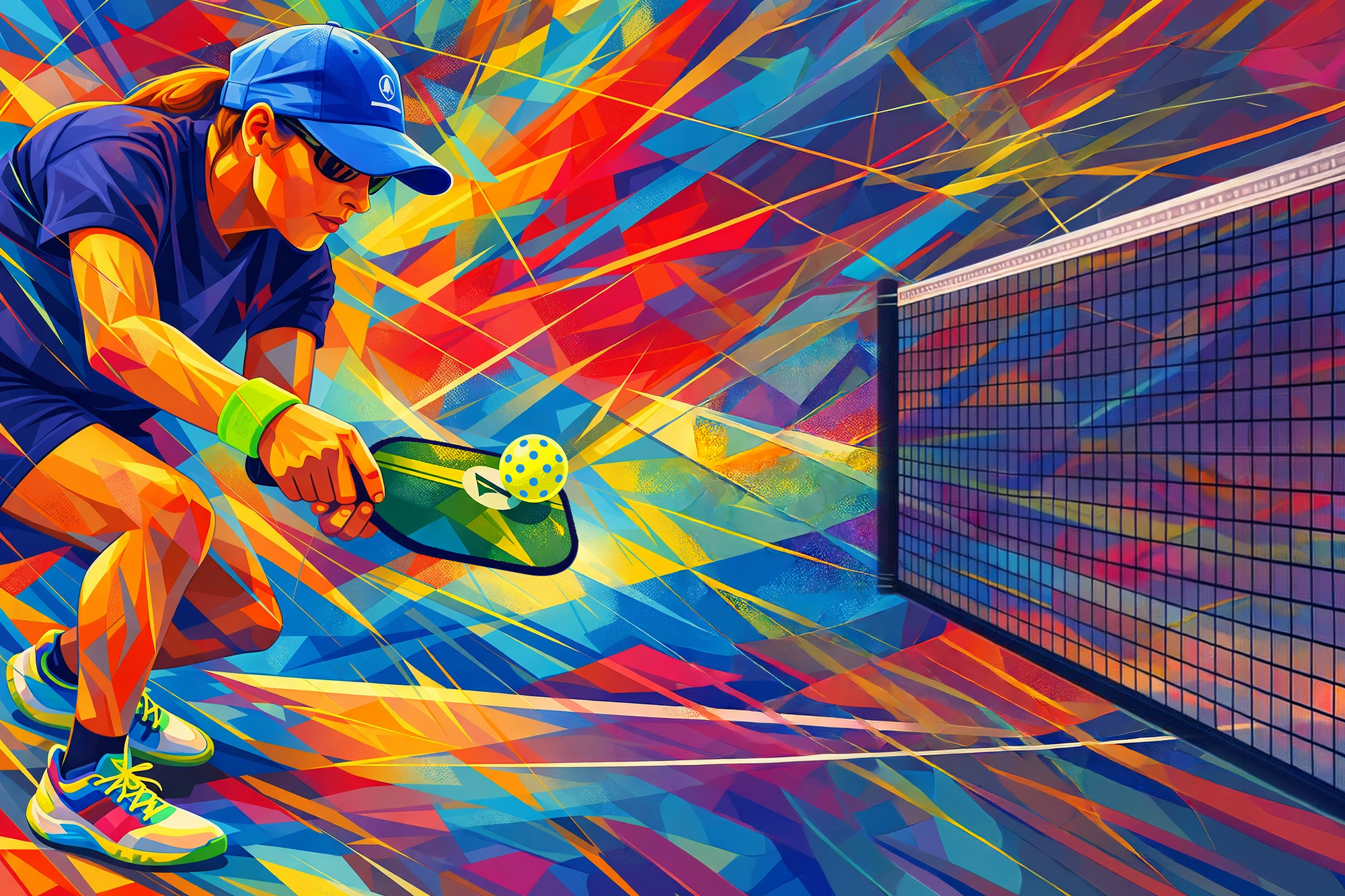
From a technical standpoint, the dink is built on subtraction rather than addition. Grip pressure softens. Swing length shortens. The paddle face stays quiet. Instead of generating force, the player absorbs and redirects incoming energy, guiding the ball gently over the net with just enough height and depth to remain unattackable.
This restraint is intentional. Every dink asks the same question: Can you execute with precision while suppressing the instinct to accelerate? The margin for error is narrow. Clear the net too low, and you clip the tape. Lift it too high, and you invite a speed-up. Place it too shallow, and the point ends quickly.
Mechanically, dinking demands stability through the lower body, relaxed hands, and repeatable motion. Mentally, it requires trust, trust that patience will be rewarded and that forcing the issue too early is a liability, not an advantage.
Why the Non-Volley Zone Changes the Brain
The non-volley zone compresses both space and perception. Players are close enough to read facial expressions, sense tension, and feel momentum shift point by point. Unlike baseline play, where distance allows recovery time and emotional reset, the kitchen offers no such buffer.
Every dink exchange becomes a prolonged exposure to pressure.
Psychologically, this environment amplifies decision fatigue. The longer a rally continues, the more tempting it becomes to end it prematurely. The brain seeks resolution. The urge to “just do something” grows louder with each neutral exchange.
Elite players recognize this urge and resist it.
Dinking as Pattern Recognition
Great dinking is not reactive; it’s anticipatory. Experienced players read cues long before contact: paddle angle, shoulder alignment, foot positioning, and recovery speed. They recognize patterns, crosscourt exchanges that repeat until someone subtly loses balance or positioning.
The best dinkers don’t attack randomly. They wait for micro-errors: a paddle that opens a fraction too much, a foot that doesn’t recover quickly enough, a player leaning forward in anticipation of speeding up. The winning move often isn’t a winner at all. It’s a dink placed half a foot wider, half a foot deeper, or slightly slower than expected.
In this sense, the dink becomes a test of perception rather than power.
Patience as Active Pressure
One of the most misunderstood aspects of dinking is patience. To the untrained eye, patience looks passive. In reality, it’s exertion through consistency.
Each neutral dink increases psychological load. Each additional exchange raises the probability that an opponent will rush, overreach, or misjudge. The player who can sustain calm while extending rallies quietly applies pressure without ever changing pace.
This is why high-level pickleball often feels slower but plays harder. The mental cost of restraint accumulates faster than physical fatigue.
The Emotional Traps of the Kitchen
Many players struggle with dinking not because of poor mechanics, but because of emotional interference. Impatience. Fear of being “stuck.” The discomfort of not controlling the point outright.
The kitchen exposes ego quickly. Players accustomed to winning through aggression may feel diminished when forced into soft exchanges. Others panic at the idea of waiting for an opening that may not come immediately.
The dink punishes emotional shortcuts. It rewards players who can remain present, neutral, and adaptable, even when rallies stretch longer than expected.
When the Dink Becomes Offensive
At advanced levels, dinking is not merely defensive. It’s a setup tool.
A well-placed dink pulls opponents wide, opens the middle, or forces awkward contact points. The transition from neutral to offensive often happens without a dramatic change in pace. Instead, it comes from positioning, stepping forward at the right moment, closing space, and taking time away without swinging harder.
The most effective attacks in pickleball frequently begin with patience, not aggression.
Why Matches Are Won Here
As skill levels rise, outright winners become rare. Points are decided by errors, many of them self-inflicted. The non-volley zone is where those errors are most likely to occur because it demands sustained focus under constant pressure.
Missed dinks, rushed speed-ups, and poorly chosen attacks often decide matches long before the scoreboard reflects it. The player who manages emotion better in the kitchen typically controls tempo, momentum, and ultimately, outcome.
A Shot That Reflects the Sport
The dink embodies pickleball’s unique identity. It values control over force, awareness over impulse, and patience over bravado. It levels playing fields and rewards adaptability, making it one of the reasons the sport resonates across ages and backgrounds.
To master the dink is to understand pickleball itself, not just as a game of shots, but as a game of decisions.
In the non-volley zone, nothing moves fast, but everything matters.
The Pickleball Editorial Team produces in-depth reporting and cover features that examine the sport’s growth, innovation, competition, and culture. With contributors who understand both the strategy of the game and the forces shaping its future, the team is committed to telling the full story of modern pickleball.

Read the full magazine issue! Click below, then click on the X in the lower bar to enjoy a full screen view!