Where Good Coaching Means Real Inclusion
Adaptive play, adaptive teaching — matching instruction to the athlete
By Stephen Pyka
March 25, 2026 • 3 min read
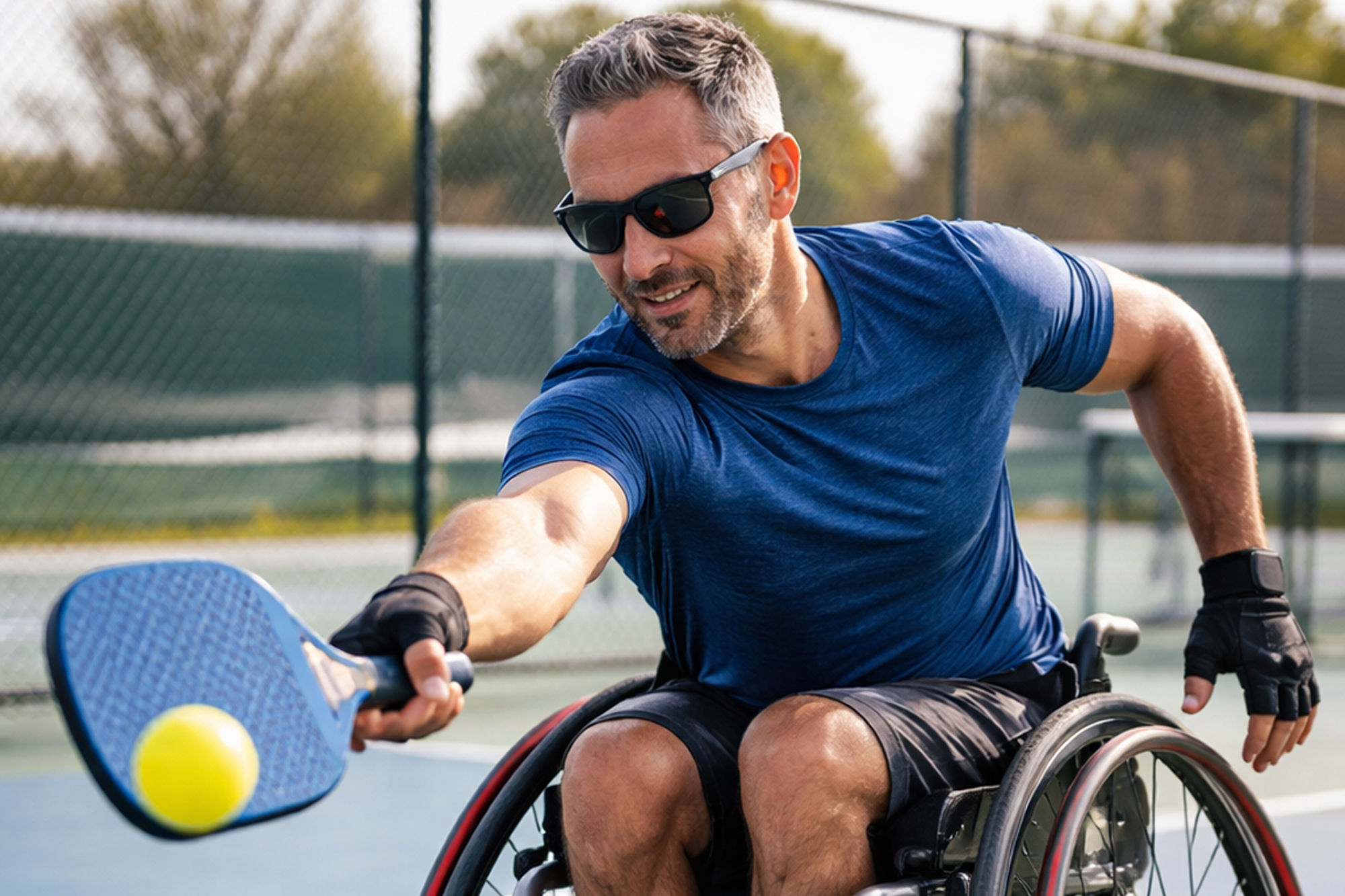
TEACHING pickleball is never one-size-fits-all. Every player walks onto the court with a different background, different movement patterns, and different goals. That is especially true when working with adaptive athletes.
Long before teaching pickleball, I was a PGA Golf Pro. At one point in my golf career, I worked with patients from Gaylord Specialty Healthcare who wanted to learn how to play the game when at The Farms Country Club. Many were recovering from traumatic brain injuries or living with physical limitations that required a completely different approach to instruction. We used specialized equipment, including clubs and carts, and modified techniques to help those athletes learn and enjoy the game of golf.
That experience shaped how I teach pickleball today. It reinforced something that applies directly to pickleball. The goal is not to fit the player into the sport. The goal is to adapt the sport to the player. It becomes a win-win.
Start with the Athlete, Not the Technique
When teaching adaptive athletes, the first step is understanding what each player can do, not what they cannot. Movement, balance, reach, reaction time, and endurance all vary widely. Two athletes with similar injuries may play the game in completely different ways. That means instruction must begin with observation.
Before introducing mechanics or strategy, watch how the athlete moves on the court. How do they position themselves? How do they recover after a shot? Where are they most comfortable? From there, build the game around their strengths.
Simplify the Court, Not the Game
One of the biggest mistakes coaches make is overcomplicating instruction. Adaptive athletes benefit from clarity and simplicity, especially early on. That does not mean lowering expectations. It means prioritizing the right things first. Focus on:
- Consistent contact over power
- Controlled placement over speed
- Positioning over movement range
Pickleball naturally supports this approach. The smaller court, slower ball, and emphasis on touch create opportunities for players of all abilities to succeed. The game does not need to be changed. It needs to be understood differently.
Emphasize Positioning and Anticipation
For many adaptive players, efficiency matters more than speed. Teaching proper positioning can dramatically improve a player’s ability to compete. Where they set up before the ball is hit often matters more than how quickly they can get there.
Anticipation becomes a key skill. Reading opponents, recognizing patterns, and preparing early can offset physical limitations. This is where coaching becomes strategic rather than mechanical.
Modify Without Compromising
Adaptation is not about making the game easier. It is about making it playable. This can include:
- Adjusting court positioning during drills
- Allowing extra time between repetitions
- Using targeted drills that isolate specific movements
- Incorporating assistive equipment when needed
The key is to maintain the integrity of the game while creating an environment where the athlete can develop confidence and consistency. Confidence drives improvement.
Communication is Everything
Clear, direct communication is essential. Avoid overloading players with too many corrections at once. Focus on one or two key adjustments per session. Reinforce progress consistently.
Encouragement matters, but so does honesty. Adaptive athletes, like all athletes, want to improve. They want to be coached, not managed. The tone should always be respectful, focused, and constructive.
Build the Environment, Not Just the Player
One of the most important lessons I learned early in my career is that the environment matters just as much as instruction. Adaptive athletes thrive in spaces where they feel included, challenged, and supported. That includes the players around them.
Encourage integration. Mix players of different abilities during drills when appropriate. Create opportunities for shared play, not separation. Pickleball is uniquely positioned to do this better than almost any sport.
The Bigger Picture
Teaching adaptive athletes is not a separate part of coaching. It is coaching. It challenges you to think differently, communicate more clearly, and focus on what truly matters in player development.
Every athlete deserves the opportunity to compete, improve, and enjoy the game. As coaches, our role is to make that possible. And when it is done right, the result is not just better players. It is a stronger, more inclusive sport. ●

About Stephen Pyka
Stephen Pyka is a PPR-certified coach, three-time brand ambassador, and Director of Pickleball at Glastonbury Tennis Club. He brings decades of experience in racquet sports, club leadership, player development, and instruction, including previous roles as a PGA golf instructor and competitive racquetball athlete. Passionate about growing the sport, he leads clinics, workshops, and DUPR events that help players of all ages and skill levels improve their game, build confidence, and reach their full potential.

Read the full magazine issue! Click below, then tap Full Screen for the best reading experience.