
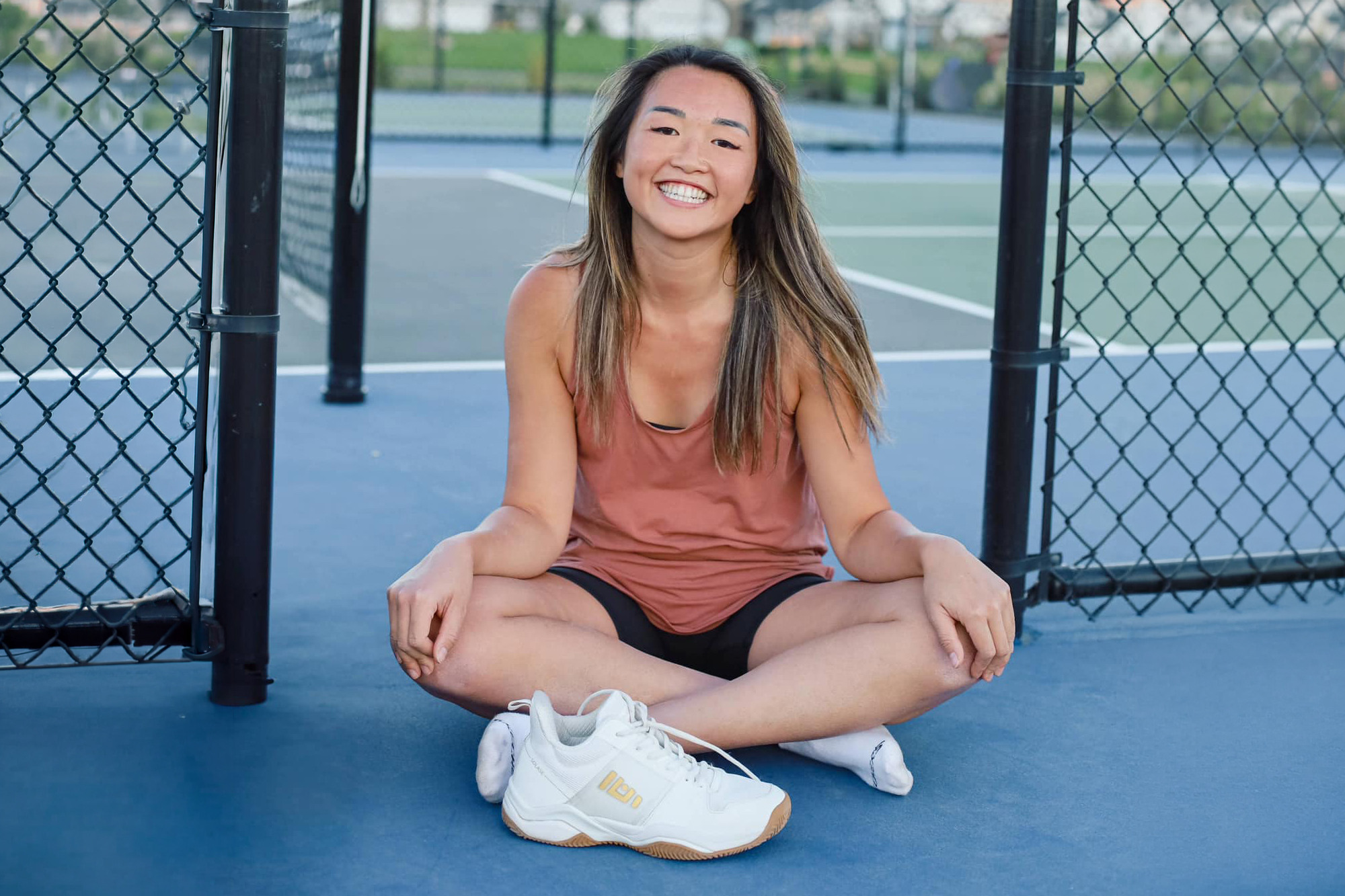
Solase Steps in with Stability & Confidence
By The Pickleball Weekly Editorial Team
April 1, 2026 • 10 min read
IN A SPORT THAT demands quick lateral movement, balance, and constant direction changes, the right footwear is not just about comfort. It is about protection, stability, and confidence. That is exactly where Solase Pickleball Shoes have entered the conversation.
Launched through Kickstarter in late 2024 and developed by pickleball player Christina Wu, Solase is a new but rapidly growing brand focused on solving one of the most common problems in the game: injury prevention. What sets the small U.S.-based pickleball shoe company apart is not just the design of its shoes, but the shoes’ origin. These shoes were created after surveying more than 1,500 players and refining prototypes through real on-court testing.
The result is a product that feels intentionally built for pickleball, not adapted from another sport.
A Player-First Approach to Design
The story behind Solase begins with a familiar experience. After repeated ankle injuries and seeing fellow players sidelined, Christina Wu set out to create a shoe that addressed the specific demands of pickleball.
Her motivation was personal. In an interview on The Founder’s Scoop podcast, Wu explained that she had sprained her ankle twice while playing and kept seeing the same issue in the broader pickleball community. She also noticed another common frustration: many so-called pickleball shoes felt more like repurposed tennis shoes than footwear truly built for the sport.
Instead of relying on traditional footwear templates, Solase was shaped by direct player feedback. Wu and her team spent over a year testing and refining details based on how players actually move on the court. That process is evident in the final product.
From the first wear, the shoes feel engineered for stability and support, particularly during lateral movements and quick stops at the kitchen line.

Q: What first convinced you there was a real need for a shoe like Solase?
WU: “A lot of people said pickleball shoes were basically just tennis shoes. I wanted to make something different, something that was really for pickleball.”
That distinction matters. Pickleball movements are compact, reactive, and often repetitive. Players are not simply sprinting forward and back. They are sliding laterally, planting hard, resetting at the kitchen, and wearing through shoes in highly specific ways. Solase was built with those realities in mind.
Stability Where It Matters Most
The standout feature of Solase shoes is the mid-cut design, which is uncommon in pickleball footwear. Most shoes in the category are low-cut, offering minimal ankle support. Solase takes a different approach.
The mid-cut structure wraps higher around the ankle, providing additional stability without feeling restrictive. For players who have experienced rolled ankles or want extra support during aggressive play, this feature immediately stands out.
Combined with a shock-absorbing sole, the shoe helps reduce impact during long sessions, making it well suited for players who spend hours on the court.
Wu has been clear that ankle protection was central to the design from the beginning.
Q: What most differentiates Solase from a standard court shoe?
WU: “Right now all the tennis shoes and court shoes are low-cuts. They are not designed to prevent ankle rolling. In pickleball there is a lot of quick lateral movement, so that is why I decided to make it a mid-cut design to help prevent that.”
That player-focused thinking gives Solase a clear identity. The shoe is not trying to be all things to all athletes. It is trying to solve a specific problem for a specific sport.
Comfort That Lasts Through Long Matches
Comfort is another area where Solase delivers. The wider toe box allows for natural foot spread, which is especially important during extended play. Many players find traditional court shoes too narrow, leading to discomfort over time.
With Solase, there is noticeably more room in the forefoot, which helps reduce pressure and allows for better balance.
The interior padding around the heel and ankle collar adds to the overall feel, although some players note that this can make the shoe run slightly small. Sizing up by half a size may provide the best fit for many players.
Wu said the wider fit came directly from feedback gathered from players. During development, she conducted approximately 200 in-person interviews and collected around 1,500 surveys to identify recurring pain points.
Q: What did players tell you they wanted most?
WU: “A lot of players mentioned that many court shoes and tennis shoes have a narrow toe box, which makes them uncomfortable. So we made our shoes with a wider toe box so players can have more natural foot movement and better balance.”
That kind of market listening is one of the strongest aspects of the Solase story. Rather than launching on branding alone, the company started by asking players what was missing.
Built for the Realities of Pickleball
Pickleball movements are unique. Quick lateral shifts, sudden stops, and frequent toe dragging near the kitchen line all place stress on specific parts of a shoe.
Solase addresses this with reinforced toe caps and side guards, designed to handle high-wear areas. These reinforcements help extend the life of the shoe, particularly for players who play frequently or compete regularly.
The outsole also provides court-safe traction, offering grip without feeling overly aggressive. This balance allows players to move confidently without sacrificing control.
Wu said this was another issue she experienced firsthand. During play, she kept seeing holes develop in high-stress areas, which helped inform the reinforcement strategy.
Q: Why was durability such an important part of the design?
Wu: “When I played, there would be holes here and holes there, but not a lot of shoes had reinforcement in those parts. So we reinforced it.”
That detail may seem small, but it speaks to a larger theme in the Solase review. This shoe was not built from abstract theory. It was shaped by the wear patterns, frustrations, and movement habits of actual pickleball players.

From Survey Data to Shoe Design
What makes Solase particularly interesting as a young brand is how deeply player feedback influenced development. Wu did not simply create a shoe and hope it resonated. She built the product by validating the need first.
She spoke to players in person, sent out surveys, tested ideas at clubs and courts, and used that information to guide the shoe’s design. She also learned quickly that not all data is equal, and that useful feedback matters more than raw response volume.
Q: How much research went into the first Solase shoe?
Wu: “We did around 200 in-person interviews and around 1,500 surveys. A lot of the ideas actually came through the in-person interviews because when you talk to people in person, it sparks ideas.”
That process also helped build early community support. Some of the same players who shared their feedback later became buyers and backers.
“Our shoes stand out with a mid-cut design for better ankle support and a wider toe box for natural foot movement, designed to make your pickleball experience more comfortable and enjoyable.” — Christina Wu, Founder of Solase
Prototyping With Purpose
The finished product did not come together overnight. According to Wu, the team went through seven prototypes in total, including early learning versions and multiple refinements with a stronger manufacturing partner. Along the way, they dropped initial manufacturers that did not meet the brand’s standards for quality or communication.
That willingness to start over says a great deal about the company’s mindset. Solase was not rushed to market simply to claim a launch. The brand kept refining until the details aligned with its original purpose.
Q: How challenging was the prototyping process?
Wu: “It was a long process because we wanted to make sure the product was good. We made seven prototypes in total. The first few helped us learn how to make shoes, and the later ones were used to let players test them and tell us what needed to be improved.”
That persistence pays off in the final feel of the shoe. Solase comes across as considered rather than improvised.
Three Styles, One Performance Platform
Solase currently offers three primary models: NightBolt, GoldForce, and Onyx. All are the same shoe, maintaining the same core performance features but differing in color.
At $125 USD, the pricing places Solase competitively within the premium pickleball shoe category, especially considering its specialized design and player-driven backstory.
For buyers, the decision is really about color preference, not performance differentiation. The core platform remains the same across the line, which simplifies the shopping experience and reinforces the idea that Solase is still focused on perfecting one strong foundational product.
A Brand Backed by the Community
One of the most compelling aspects of Solase is its connection to the pickleball community. The brand’s successful Kickstarter launch demonstrated clear demand for a shoe designed specifically for the sport.
Wu launched the campaign before everything was perfect, but only after she felt the product was strong enough and momentum mattered. That decision proved wise. Solase reached its Kickstarter funding goal and used that support to continue improving the product while securing its manufacturing queue. Since then, the company has expanded its presence, building a growing base of players who value both performance and purpose-driven design.
That spirit is also reflected in the brand’s logo, which incorporates the Chinese character for heart. Wu has said that the symbol reflects her belief that confidence and success begin with mindset.
It is a fitting philosophy for a brand built around confidence, prevention, and preparation. Solase is not just selling a shoe. It is selling the feeling of stepping onto the court more supported than before.
Final Verdict
Solase is not just another entry into the growing footwear market. It represents a shift toward player-driven innovation, where real feedback shapes real solutions.
“Pickleball has brought me so much joy, and it’s my dream to give back to the community with shoes made for players,” said Wu on a social media post. “If we set our mindset right, we’re going to be successful.”
For players who prioritize ankle support, comfort, and durability, Solase offers a thoughtful alternative to traditional court shoes. The mid-cut design alone makes it stand out in a crowded category. More importantly, the shoes deliver on their core promise: helping players feel stable, supported, and confident every time they step onto the court.
Christina Wu is not just designing shoes. She is designing around the realities of pickleball and the mindset players bring into every point. In that sense, Solase feels less like a trend and more like a purposeful response to what many players have been asking for all along. ●
About The Pickleball Weekly Editorial Team
The Pickleball Weekly Editorial Team produces in-depth reporting and cover features that examine the sport’s growth, innovation, competition, and culture. With contributors who understand both the strategy of the game and the forces shaping its future, the team is committed to telling the full story of modern pickleball.

Read the full magazine issue! Click below, then tap Full Screen for the best reading experience.
