
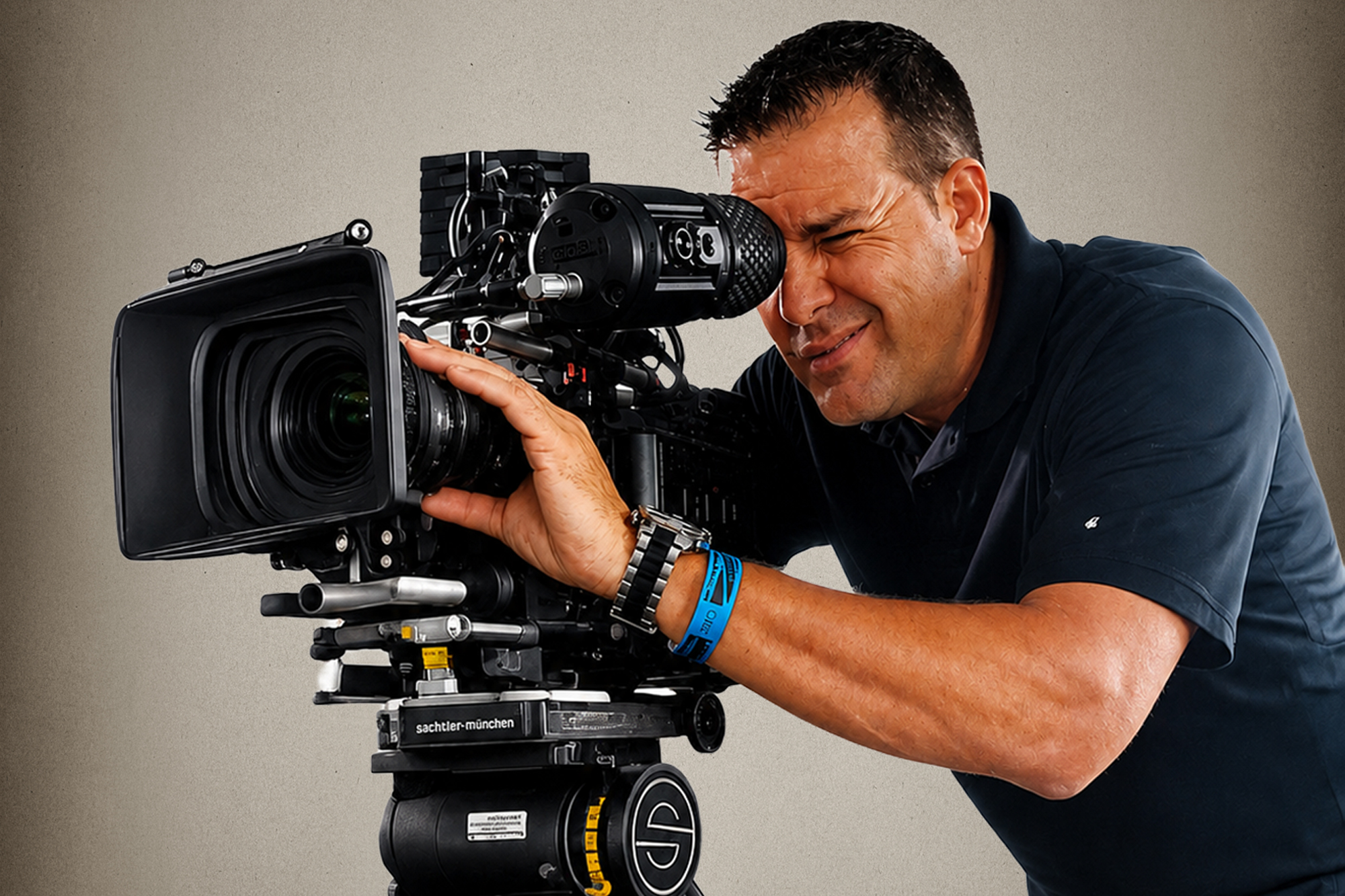
The Man Behind the Broadcast: From One Hour on CBS To 250 Million Homes
By Carl Foster
August 12, 2026 • 16 min read
THIS WEEK MY conversation is with truly one of the pickleball broadcast pioneers, Ray Colaiacovo, who has been blazing pickleball’s broadcast airwaves for more than a decade and is also a good friend.
We still battle on the pickleball courts in Boca and have been working together not only during my tennis years as “The Voice of the Delray Beach ATP” event the past 30 years, but Ray directed and produced my APP Delray Beach Pickleball Open, the first on CBS Sports Network back in 2021.
A Pioneer Behind the Camera
Ray is an Emmy Award–winning producer and the owner of Digital Wave Productions TV, Inc. He is also the creator and owner of PickleTV247, the world’s first 24-hour television channel dedicated exclusively to pickleball. Available across Amazon platforms and numerous additional networks, PickleTV247 reaches more than 250 million homes worldwide.
With an extensive background in sports broadcasting and live production, Ray has played a groundbreaking role in elevating pickleball to the national stage. His work has helped define industry standards for how the sport is filmed, produced, and presented on television.
In 2015–2016, Ray became the first person to bring pickleball to a national broadcast network when he successfully pitched and produced the US Open of Pickleball for CBS. What began as a one-hour, tape-delayed broadcast has since evolved into more than ten hours of live national coverage for the 2025 US Open.
During this period, Ray pioneered several innovative broadcast techniques that reshaped how pickleball is viewed, including the introduction of the Kitchen Camera, which provided audiences with an entirely new and immersive perspective of the game.
Following the success of the US Open of Pickleball, Ray played a key role in helping launch the Professional Pickleball Association (PPA). He designed the league’s broadcast style and technical presentation and produced every piece of live PPA content during its first two and a half years, establishing the league’s media identity and laying the foundation for its national success.
Ray also revolutionized pickleball officiating by introducing instant replay and line-call review technology. He was the first to convince PPA leadership to implement replay at a live event in California, significantly improving transparency, fairness, and viewer engagement.
As a result of these innovations, PPA broadcasts expanded to major national networks including Fox Sports, ESPN, and CBS. Ray’s efforts also played a critical role in securing PPA’s partnership with the Tennis Channel, an important milestone in pickleball’s journey into the mainstream.
Notably, when Ray first approached the Tennis Channel in 2015 about airing the US Open of Pickleball, the proposal was declined. Eight years later, the network became a part-owner of a professional pickleball league, underscoring the sport’s explosive growth, growth Ray helped drive from the very beginning.
Beyond the PPA, Ray was instrumental in launching Major League Pickleball (MLP), bringing its first three events to national television when they were originally planned for local affiliate distribution only.
He also helped elevate the APP Tour by producing and airing its first-ever national broadcast on CBS, live from the Delray Beach Tennis Center in Florida.
Recognizing his expertise, the National Pickleball League (NPL) hired Ray and Digital Wave Productions to package and produce its championship events for two consecutive years, held in Arizona and Ohio.

Ray’s influence extends beyond league broadcasts. He has served as a consultant to major pickleball organizations, including the National Collegiate Pickleball Association (NCPA), World Pickleball, and Pickle4. Through this work, he helped develop the innovative Ballpark Series, which brought professional pickleball into iconic baseball stadiums such as Fenway Park and Oracle Park.
In addition to producing more than 100 live sports events annually across multiple networks, Ray has expanded into the pickleball equipment space. He is the founder of Ninja Pickleball Club, a brand offering a full line of paddles, balls, and bags available at NinjaPickleballClub.com.
With decades of experience in live sports production, broadcasting innovation, and event development, Ray Colaiacovo remains a driving force behind pickleball’s rapid growth and its continued expansion across national and global media platforms.
Behind the Scenes with Ray Colaiacovo
CARL: Ray, we go back years doing tennis together at the Delray Beach Open. When did you first get introduced to pickleball?
RAY: I always tell people I didn’t find pickleball. Pickleball found me.
Around 2015, I received a phone call from a young woman who asked if I could help bring a new sport to television. She got my name through one of my longtime clients, the City of Naples, Florida. At the time, I was producing Pro Watercross (jet ski racing) for CBS Sports Network, so she knew I had experience helping emerging sports find a television audience.
We talked for 15 or 20 minutes about television, production, and what it would take to showcase this new sport.
Finally, I stopped her and said, ‘Wait a minute, you’ve never even told me what the sport is.’
She laughed and said, “I didn’t want to tell you because I was afraid you wouldn’t take it seriously.”
I said, ‘No, really. What’s it called?’
She said, “Pickleball.”
I remember saying, ‘What the heck is pickleball?’
She asked me if I played any paddle or racquet sports. I told her I had played a lot of competitive table tennis and had an athletic background.
“Perfect. You’re going to love it,” she said and arranged for me to meet a local pro in Delray Beach to experience the game for myself.
When I arrived at the gym, I honestly wondered if I was in the right place. The courts were taped onto a basketball floor, the nets were temporary, and there were tube socks, headbands, and short shorts everywhere. Most of the players looked like they were well into their seventies.
I looked at the pro and said, ‘Are we in the right place?’
He just smiled and said, “Put your paddle in the box.”
It wasn’t even a paddle rack. It was literally a cardboard box. We dropped our paddles in, and they paired us against a gentleman and a woman who looked to be in their mid-70s.
I’ll admit it, I thought, ‘This isn’t going to end well for them.’
I had played collegiate football, professional beach volleyball, and had always considered myself a pretty good athlete. My partner was a teaching pro. We figured we’d be just fine. We weren’t. They absolutely destroyed us. I think the score was something like 11-2.
When we walked off the court, I looked at the pro and said, ‘Aren’t you supposed to be a pro?’
Without missing a beat, he looked back at me and said, “Aren’t you supposed to be an athlete?”
Touché. That was the moment I fell in love with pickleball. We kept playing throughout the day, and little by little we started figuring it out. The strategy, the soft game, the patience, it wasn’t anything like I expected.
I didn’t immediately call the tournament organizers back. Instead, I called several executive producers I knew around the industry and started talking about this sport that had completely surprised me. One network saw what I saw. CBS took a chance on both me and pickleball, giving us an hour of national television coverage for what would become the U.S. Open Pickleball Championships.
The rest, as they say, is history. Looking back now, I’m incredibly grateful that pickleball found me, because it’s been one of the most rewarding chapters of my broadcasting career.
“We had to rethink everything, from camera placement and graphics to storytelling.” — Ray Colaiacovo, Emmy Award-winning Producer and Director, Co-founder, PickleTV on Amazon Prime Video
CARL: With over 30 years of broadcast experience focused on emerging sports, what challenges did you face making pickleball appealing on television?
RAY: The biggest challenge was convincing people that what looked simple from the outside was actually incredibly fast and strategic. Early broadcasts often looked flat because traditional camera positions didn’t capture the speed of the kitchen exchanges or the athleticism of the players.
We had to rethink everything, from camera placement and graphics to storytelling. Viewers needed to understand the personalities, the strategy, and why every point mattered. Once we started bringing cameras closer to the action, improving the audio, slowing down key moments with replay, and treating the athletes like stars instead of just competitors, the sport became much more engaging on television.
CARL: You’ve seen pickleball rise each year in Naples. Has the broadcast side grown as fast?
RAY: The sport has probably grown even faster than television has been able to keep up with. Participation exploded almost overnight, while broadcast production takes years to evolve because it requires investment, technology, experienced crews, and distribution.
That said, we’ve come a long way. The U.S. Open started as a one-hour, tape-delayed show and has grown into more than ten hours of live national coverage. Networks, sponsors, streaming platforms, and technology have all improved dramatically.
I still think we’re in the early innings when it comes to television production. When I approached CBS and basically begged the networks to take a serious look at pickleball, a couple of them, including Tennis Channel, weren’t interested. Some wouldn’t even take the meeting. CBS gave both me and the sport our first opportunity. Looking back today, I think that decision proved to be the right one for everyone.
CARL: You’ve seen the sport mature from Delray Beach’s own, 12-year-old Anna Leigh Waters winning with her Mom, Leigh Waters, at the US Open to ALW teaming with Andre Agassi, the tennis legend , now addicted like all of us to pickleball, at his coming out US Open party last year. Was that another level?
RAY: Without question. Back in 2018, the owners of the U.S. Open asked me if they could put a couple of juniors on the court to fill sometime between matches. I remember saying, “Wait… there are juniors playing this sport?”
That’s when Anna Leigh Waters and William Sobek walked onto the court. Anna Leigh was only 12 years old, the same age as my daughter at the time. For the first time, I actually left my position in the production truck as the director because I wanted to see this in person.
I couldn’t believe what I was watching. Here was a 12-year-old girl competing against, and beating, professional players. I remember thinking, this is special. I immediately asked the tournament owners to introduce me to her parents so we could sit down and do an interview with them.
Watching Anna Leigh grow from that young phenom into arguably the face of professional pickleball has been remarkable. Seeing her later team with tennis legend Andre Agassi wasn’t just a celebrity moment. It validated how far the sport has come.
When icons from other sports want to be part of pickleball, it tells the world this is no longer just a recreational activity. It’s a legitimate professional sport with global appeal.

CARL: You’ve introduced new technology for CBS Sports Network. What innovations stand out, and where is technology heading?
RAY: One of the biggest innovations we introduced was the Kitchen Camera, giving fans an angle they’d never seen before and bringing them right into the fastest part of the game.
We also helped introduce enhanced replay systems, line-call reviews, improved graphics, and more dynamic camera positioning that showcased the speed and athleticism of the players.
Looking ahead, AI will change almost every part of production. Automated highlights, smarter camera tracking, real-time analytics, enhanced player statistics, predictive graphics, and personalized viewing experiences will become commonplace. Technology won’t replace storytellers, but it will make broadcasts smarter, faster, and more immersive.
CARL: You launched PickleTV, the first 24-hour pickleball channel. You have aired our Inside WORLD Pickleball Weekly magazine show and what do you air for 24 hours a day? How do you also compete with the other PickleballTV content?
RAY: PickleTV was created because there simply wasn’t a place where fans could watch pickleball all day. We were the first 24-hour pickleball channel by more than a year.
Today, we air live tournaments, classic matches, instructional programming, magazine shows, interviews, documentaries, behind-the-scenes features, junior events, collegiate competitions, international tournaments, and original programming from around the world.
Competition is healthy. Tennis Channel, Pickleballtv, and others all help grow awareness of the sport. Our vision is different. We want PickleTV to be the global home for the entire sport, not just one tour. That means showcasing every level of pickleball, from grassroots events to international championships.
It’s actually a compliment when you’re competing against a large corporation like Sinclair and Tennis Channel, and they’re actively pursuing many of the same events, partners, and clients. That tells me we’re building something people value. There’s room for both of us to succeed. Today, PickleTV reaches audiences in more than 180 countries with content from all over the world.
“We’ve watched the sport grow from a niche activity into a global movement. I think the next decade will be about connecting those communities through television, streaming, and digital media in ways we’ve never seen before.” — Ray Colaiacovo, Emmy Award-winning Producer and Director, Co-founder, PickleTV on Amazon Prime Video
CARL: Podcasts and video webcasts are becoming mainstays now online and all over social media outlets. Where do podcasts and webcasts fit into the future?
RAY: They’re becoming essential. Fans today don’t just consume live matches, they want conversations, analysis, personalities, and behind-the-scenes stories throughout the week.
Podcasts and webcasts allow players, coaches, manufacturers, and tournament organizers to connect directly with fans. On PickleTV, they’ll continue to become a larger part of our programming because they keep audiences engaged between tournaments while helping grow the community. In fact, we’ve just signed two of the biggest podcasts in pickleball, and we’ll be announcing both partnerships within the next week.
CARL: You’re an avid player and developed Ninja paddles and apparel. How do you see the paddle market evolving?
RAY: The explosion of paddle companies has been incredible for innovation, but it has also created challenges. Performance has advanced so quickly that governing bodies have had to tighten equipment standards to protect the integrity of competition. I think that’s healthy. Over time, the market will naturally consolidate around companies that consistently produce high-quality equipment while staying within evolving standards. Innovation should continue, but fairness has to remain the priority.
NinjaPickleballClub.com is truly a passion project. The difference between my brand and many of the big-box brands is that I approach paddle design the same way I approach television production: it’s personal. I want to play with the very best equipment, so I’m only going to build products that I personally want to use.

That passion will never get lost in the pursuit of volume. I actually like the boutique feel of the brand. Today, you can purchase Ninja products through our website, and soon you’ll also be able to find them at our first pro shop at The Brook in Boynton Beach, Florida.
CARL: Finally, Ray, what’s your vision for international television production?
RAY: I believe the biggest growth story in pickleball is outside North America.
Countries like the Cayman Islands, India, Vietnam, China, Australia, Southeast Asia, Europe, and parts of South America are embracing the sport at an incredible pace.
Our goal at PickleTV is to help connect those markets by producing world-class broadcasts that tell local stories while reaching a global audience. Sports have always brought people together, and pickleball is uniquely positioned to become one of the world’s truly international participation sports.
For me, that’s the exciting part. We’ve watched the sport grow from a niche activity into a global movement. I think the next decade will be about connecting those communities through television, streaming, and digital media in ways we’ve never seen before.
You can also now watch our PICKLETV “Pickleball is Life” on our YouTube Channel at YouTube.com.
“The matches are already exciting. Our job as broadcasters is to help viewers understand why they should care before the first serve is hit.” — Ray Colaiacovo, Emmy Award-winning Producer and Director, Co-founder, PickleTV on Amazon Prime Video
One Final Take
Pickleball’s rise from a niche recreational activity to one of the fastest-growing sports in the world did not happen by accident. It required visionaries who were willing to see the sport’s potential before the rest of the industry did.
Ray Colaiacovo was one of those pioneers. His work behind the cameras has shaped how millions of fans experience pickleball today, while his continued commitment to innovation through PickleTV and Digital Wave Productions ensures that the sport’s next chapter will reach an even larger global audience.
As pickleball continues its remarkable expansion, Ray’s fingerprints will remain on the broadcasts that bring the game to life for fans around the world. ●
About Carl Foster
Carl Foster is the Chairman of the World Pickleball Conference and the CEO of Foster Events Group, LLC, where he specializes in the production and management of high-profile sports and entertainment events. With over 50 years of experience in broadcasting, fundraising, and event leadership, he produces Inside WORLD Pickleball and serves as a lead moderator for industry summits. He is a central figure in the professionalization of pickleball, connecting technology experts, organizational leadership, and the player community to elevate the sport’s presence on a global scale.

Read the full magazine issue! Click below, then tap Full Screen for the best reading experience.
