From Paris to Prague: Pickleball’s Takeover of Europe
By Alexandra Sinopoli • September 23, 2026 • 9 min read
Pickleball is gaining momentum across Europe
YOU MIGHT NOT expect to find pickleball on a European vacation.
Maybe you picture yourself walking along the Seine in Paris, drinking espresso in Rome, exploring the streets of Ireland or taking a train through Germany. But there is another activity that is making its way onto European itineraries more and more: picking up a paddle.
Pickleball is growing throughout Europe, and the sport’s expansion is becoming harder to miss. From France and Spain to Sweden, Ireland, Finland and the Czech Republic, players are competing in tournaments across the continent while national organizations and professional tours work to build a stronger European pickleball community.
According to the European tournament calendar maintained by Bonjour Pickleball, 196 pickleball competitions are being tracked across 24 European countries in 2026. The United Kingdom currently accounts for 44 of those tournaments, followed by Spain with 23, Germany with 17, Italy with 12 and Finland and Sweden with nine and eight, respectively. The Czech Republic and Ireland each have five tournaments listed.
And next week is a perfect example of just how widespread the sport has become.
A Busy Week Across the Continent
From September 23–27, European players will have plenty of opportunities to compete.
France alone has several tournaments scheduled, while Sweden will host an event in Borlänge. Ireland’s Leinster Open will take place in Dublin, with tournaments also scheduled in the Netherlands, Germany, Finland, Belgium, Latvia and Italy.
In Dublin, the Leinster Open will take place September 26–27 at The Sports Dome in Terenure. Pickleball Ireland has also already announced its European Open and Irish Nationals later in the year, demonstrating that competitive opportunities in the country extend well beyond a single weekend.
Meanwhile, players in Finland will compete at the Pickleball Joensuu Open, Germany will host the Mittelhessen International Open in Solms, and Italy will have the Italian Pickleball Tour in Bergamo. There are also tournaments taking place in Belgium, the Netherlands, Latvia and the United Kingdom.
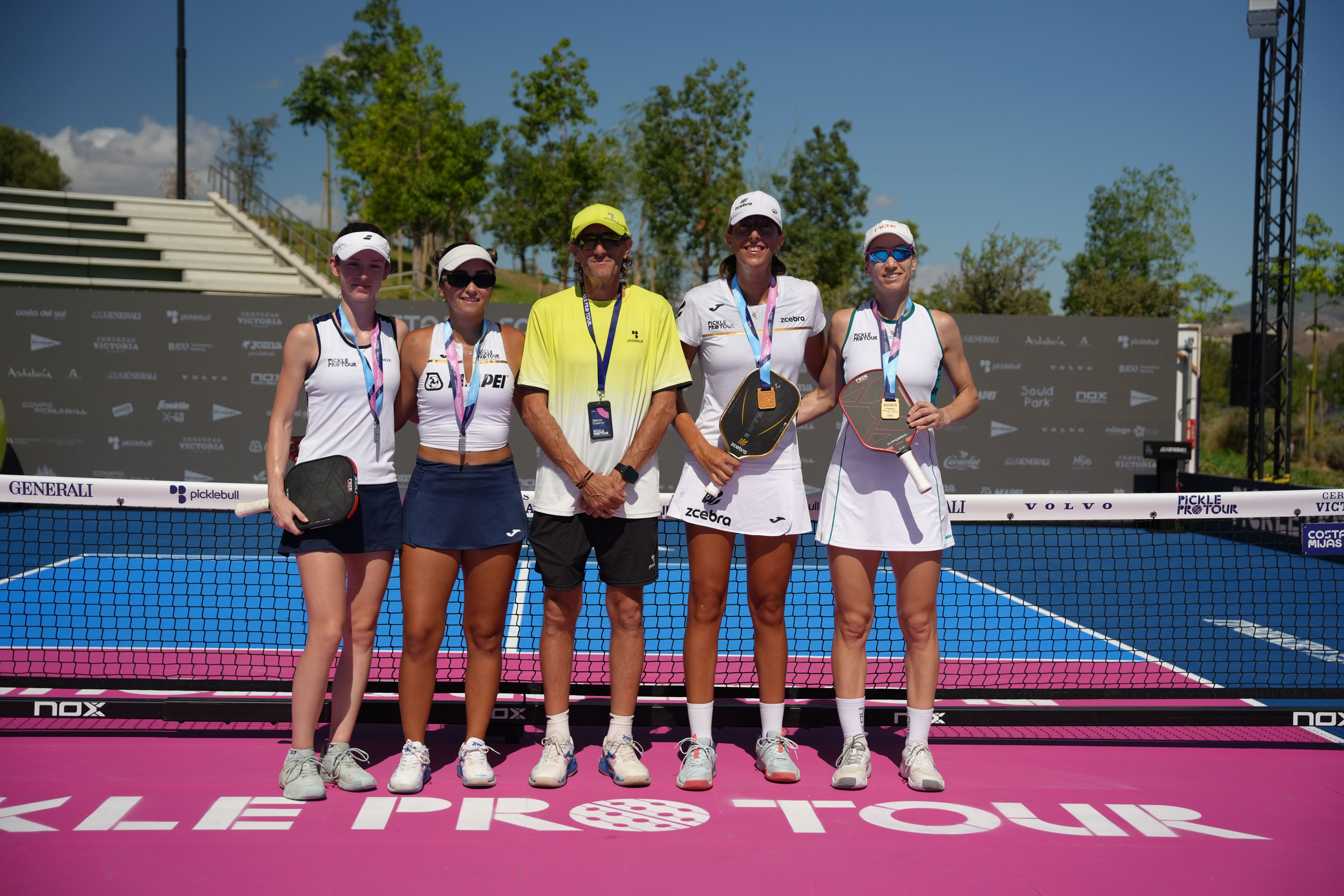
And yes, Barcelona is on the calendar too. The PPA Tour Spain P250 will run September 23–27 in Sant Joan Despí.
But Barcelona is only one piece of a much larger European picture.

France Is Building a Pickleball Foundation
France may be one of the clearest examples of pickleball moving from a niche recreational activity toward a more organized sport.
In January 2026, the French Tennis Federation (FFT) received official responsibility from the French Ministry of Sports for organizing and developing pickleball in France. The FFT, which already oversees thousands of tennis clubs, said its goal is to expand pickleball through clubs, schools, education, facilities and high-level competition.
That infrastructure is already starting to show.
The first French Pickleball Championships were held in Aix-en-Provence in July 2026. The event featured beginner, intermediate and elite divisions and marked the first edition of the national championships. According to the FFT, France had more than 42,000 pickleball players and more than 900 clubs offering pickleball at the time of the championships.
That is a pretty significant shift for a sport that is still relatively young in Europe.
France’s 2026 competition calendar is also filling up, with regional championships, national events and other tournaments giving players more chances to compete throughout the year.
For a sport that depends heavily on accessible courts and local communities, having an established national sports federation behind it could make a major difference.

Prague Is Putting Czech Pickleball on the Map
The Czech Republic is another example of the sport developing a competitive identity of its own.
Earlier this year, Prague hosted the second WPC Prague Czech Open at TK Sparta Praha. The tournament attracted 192 players from 18 countries, including competitors from across Europe as well as the United States, Malaysia and Vietnam.
The event included singles, doubles and mixed doubles, along with different skill and age divisions.
More importantly, the tournament brought together players from different countries and allowed Czech players to compete in an increasingly international environment.
The Czech Pickleball Association has also hosted the International Pickleball Czech Open, demonstrating that international competition is becoming part of the country’s pickleball calendar rather than a one-time novelty.
While Prague might be better known for its castles, architecture and beer halls, the city is quietly becoming another stop on Europe’s pickleball map.
The Professional Game Is Following
Grassroots tournaments are only one part of the story.
Professional pickleball organizations are increasingly looking toward Europe as an important part of the sport’s future.
The Carvana PPA Tour’s 2026–27 season includes its most extensive international presence yet, with international events and new regional tours being developed alongside its U.S. schedule. The organization says the 2026–27 calendar includes more than 25 international events across its international operations, with ranking points from PPA-sanctioned events contributing to a unified global ranking.
Spain is the newest addition to that expansion.
PPA Spain launched its inaugural seven-tournament season in 2026, beginning with the September P250 in Barcelona. The schedule includes PPA 125, 250 and 500-level events, with points counting toward the global PPA ranking system.
That matters because it creates something European players have not always had: a clearer pathway from local competition toward the professional game.
Instead of having to travel to the United States to compete in a major professional event, players can increasingly earn ranking points and gain experience closer to home.
And the PPA isn’t the only organization looking at Europe.
The Association of Pickleball Players has also expanded its relationship with the European Pickleball Federation, with the organizations working together on tournament operations, athlete development, event promotion and grassroots initiatives. The partnership includes the upcoming 2026 European Pickleball Open in Türkiye.
A More Organized European Pickleball Community
As the number of tournaments grows, so does the need for a unified structure.
The European Pickleball Federation (EPF) currently represents 38 member countries. In July, the federation announced that its members had given the board a mandate to pursue continental membership with both the World Pickleball Federation and Global Pickleball Federation. The vote passed 17–1.
The EPF described the move as an effort to support international unification rather than choosing between competing international organizations.
For European players, that larger structure could eventually mean more consistent competition, development opportunities and international pathways.
The federation already maintains tournament information from countries ranging from Austria and Belgium to Germany, Italy, Spain, Sweden, Switzerland and Türkiye.
And there’s a major event on the horizon.
The inaugural European Pickleball Open will take place November 3–8 in Antalya, Türkiye. The event will welcome players from across Europe and include junior divisions, with the tournament hosted at the Ali Bey Club Manavgat, which has 18 dedicated competition-standard pickleball courts.
For a sport still establishing itself on the continent, an event bringing together players from across Europe could become an important annual fixture.

Why Europe?
So why is pickleball finding an audience across Europe in the first place?
Part of the answer is that the sport fits naturally into the infrastructure that already exists.
Pickleball courts are relatively small, and multiple courts can fit inside a single tennis court. The French Tennis Federation, for example, notes that four pickleball courts can fit within the footprint of one tennis court.
That makes the sport particularly adaptable for tennis clubs that want to offer something new without completely rebuilding their facilities.
There is also the social side of pickleball.
Doubles play, mixed-age competition and relatively easy entry-level rules make it possible for people with very different athletic backgrounds to play together. In Europe, where tennis clubs already provide established communities and facilities, pickleball can be added rather than introduced completely from scratch.
The result is a sport that can appeal to serious competitors while still maintaining the social atmosphere that made it popular in the first place.
From Paris to Prague and Beyond
Europe’s pickleball growth is not happening in one city or one country.
It’s happening in dozens of them.
One weekend, players can compete in Dublin. The next, they can head to Italy. There are tournaments in France, Germany, Sweden, Finland, Belgium and the Netherlands. Professional tours are building international schedules, national federations are adding championships and European organizations are working toward a more unified structure.
That doesn’t mean every European country is at the same stage. Some have established national programs and large tournament calendars, while others are still developing their pickleball communities.
But that’s part of what makes the European scene interesting right now.
The sport is still being built.
For travelers, that means pickleball could become another way to experience a city beyond the typical tourist attractions. For players, it means more opportunities to compete internationally without necessarily crossing an ocean. For the sport itself, it means a growing network of players, clubs, tournaments and organizations that stretches far beyond its American roots.
So the next time you’re planning a European getaway, don’t be surprised if your itinerary includes more than museums, cafés and sightseeing.
You might want to pack a paddle, too.
About Alexandra Sinopoli
Alexandra Sinopoli is a media and communications student in her senior year at Arizona State University and an editorial intern with The Pickleball Weekly. Originally from Southern California, she has always enjoyed reading, traveling, and learning about new people and places. Alexandra previously wrote for The Moorpark Reporter, where she covered the performing arts, and has experience in journalism, social media, and content creation through her social media accounts. She especially enjoys travel and lifestyle writing and finding ways to make a story feel relatable to the people reading it. Outside of work and school, she’s usually planning her next trip, exploring somewhere new, or spending time with friends and family.

Read the full magazine issue! Click below, then click on the X in the lower bar to enjoy a full screen view!