
Indoor vs. Outdoor Play: The Effect on Your Body
By Michael Falco • Apr 8, 2026 • 4 min read
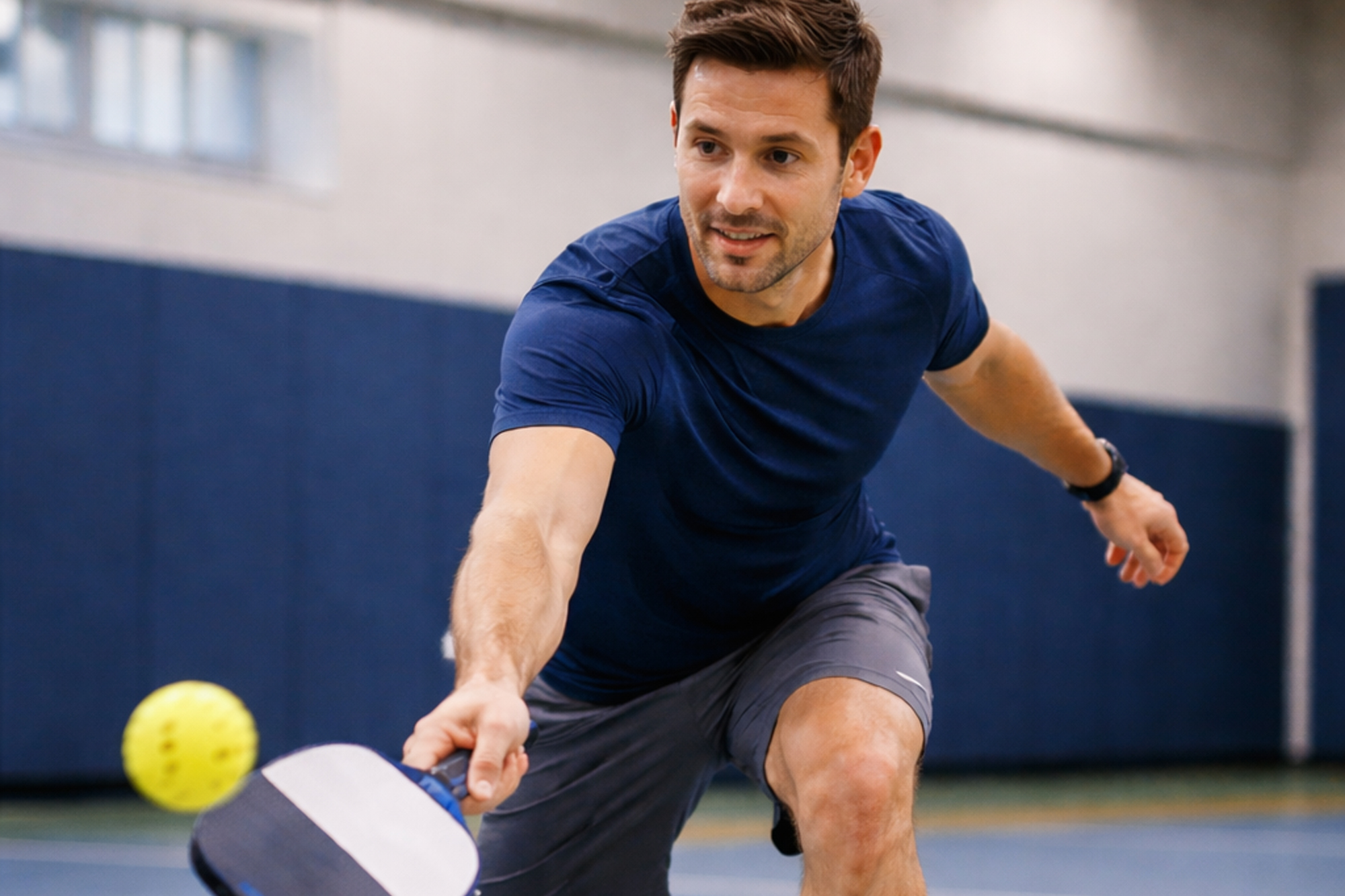
PICKLEBALL may be played on the same dimensions, with the same rules and equipment, but the environment changes everything. Indoor and outdoor play create two distinctly different physical experiences, shaping how the body moves, reacts, and recovers.
For many players, the difference is felt immediately. The game indoors often feels faster and more controlled, while outdoor play introduces variables that demand constant adjustment. What is less obvious, but more important, is how those differences affect the body over time.
The Impact of Surface
The playing surface is one of the most significant factors influencing physical demand. Outdoor courts are typically made of asphalt or concrete, materials that are unforgiving underfoot. Every step, pivot, and stop sends force back through the feet, ankles, knees, and hips. Over time, that repeated impact can contribute to fatigue and, in some cases, overuse injuries.
Indoor courts, often constructed from wood or sport tile, provide more give. The slight cushioning reduces joint stress and allows for smoother movement. Players often find they can move more freely indoors, with less cumulative strain on the body during extended play.
That difference does not make one environment better than the other, but it does change how the body responds. Outdoor play demands greater durability. Indoor play allows for more fluidity.
Movement and Footwork
Movement patterns also shift between environments. Indoors, the absence of wind and external distractions allows players to rely on rhythm and timing. Footwork becomes more precise, with fewer unexpected adjustments.
Outdoors, movement is more reactive. Wind can alter the flight of the ball, forcing last-second corrections. Sun glare can delay recognition by a fraction of a second, which is often enough to change positioning. Even slight variations in surface texture can influence how a player plants and pushes off.
These constant micro-adjustments place additional demands on stabilizing muscles, particularly in the lower body. The ankles and hips work harder to maintain balance, while the core engages to keep movements controlled under less predictable conditions.
Lighting and Visual Strain
Lighting is another factor that quietly affects performance and physical effort. Indoor lighting is consistent, allowing players to track the ball cleanly from paddle to bounce. The eyes adjust quickly, and reaction time becomes more reliable.
Outdoor play introduces variability. Changing sunlight, shadows, and glare can make tracking the ball more difficult. Players may squint, hesitate, or adjust their positioning to compensate. These small visual challenges translate into physical ones, often leading to delayed reactions and less efficient movement.
Over time, this can increase fatigue, not just in the body, but in focus and concentration.
Weather and Environmental Stress
Temperature and weather conditions add another layer of physical demand outdoors. Heat can accelerate fatigue, dehydrate the body, and reduce endurance. Cold conditions can limit flexibility and increase the risk of muscle strain. Wind introduces unpredictability that forces players to stay more engaged, both mentally and physically.
Indoor places remove most of these variables. Climate-controlled conditions allow for steadier performance and more consistent energy output. The body is not working to regulate temperature or adjust to external factors, which can make indoor play feel less taxing over long sessions.
Ball Speed and Game Tempo
Play pace often differs as well. Indoor games tend to feel quicker, with the ball traveling more predictably and rallies developing at a steady rhythm. Outdoor play can vary from point to point, depending on wind and conditions.
This variation changes how the body responds. Indoors, players may experience more continuous movement at a consistent intensity. Outdoors, the intensity can fluctuate, with sudden bursts of effort followed by slower exchanges. Both demand fitness in different ways. Indoor emphasizes sustained movement. Outdoor requires adaptability.
Fatigue and Recovery
Because of these differences, fatigue accumulates differently in each setting. Outdoor play often leads to greater overall physical fatigue due to surface impact and environmental stress. Indoor play, while easier on the joints, can still be demanding through sustained rallies and repetition.
Recovery should reflect these differences. Outdoor players may need to focus more on joint care and hydration, while indoor players may benefit from managing repetitive strain and maintaining flexibility.
Understanding how each environment affects the body allows players to prepare more effectively and recover more intelligently.
Adapting Your Game
The most effective players recognize that indoor and outdoor pickleball are not interchangeable experiences. They adjust their movement, pacing, and expectations accordingly.
Outdoors, patience and adaptability become essential. Indoors, precision and rhythm take precedence. In both cases, awareness of how the body is responding is what allows players to perform consistently.
A Different Kind of Demand
Indoor and outdoor pickleball may look similar, but they ask different things of the body. One emphasizes control and consistency. The other demands resilience and adjustment. Neither is inherently easier. They are simply different. And understanding those differences is what allows players not only to compete, but to sustain their performance over time.
Michael Falco is a Certified Master Trainer and ISSA Personal Trainer, an ISSA Nutritionist, and an FWI Certified Life Coach. He trains clients at LA Fitness in North Wales, PA, and writes the Health & Wellness column for The Pickleball Weekly.

Read the full magazine issue! This story appeared in the April 8, 2026 issue of The Pickleball Weekly.
