
Win Free Points with These Easy Patterns
Four patterns to anticipate shots and build your match game plan
By Connor Garnett
October 14, 2026 • 4 min read
Have you ever felt like your opponent is already waiting for the next shot after they hit the ball? Patterns are a big reason why.
Recognizing patterns can help you anticipate the next ball instead of simply reacting after it arrives. I use four patterns in my own game that can help you begin thinking ahead: a dinking pattern, a speed-up pattern, a serving pattern and a returning pattern.
The goal is to understand what your shot is likely to create and prepare for what comes next. When you recognize what is developing, you can anticipate the next ball better and be ready to take advantage of it.
1. Dinking Pattern: Wait for the Ball You Can Attack
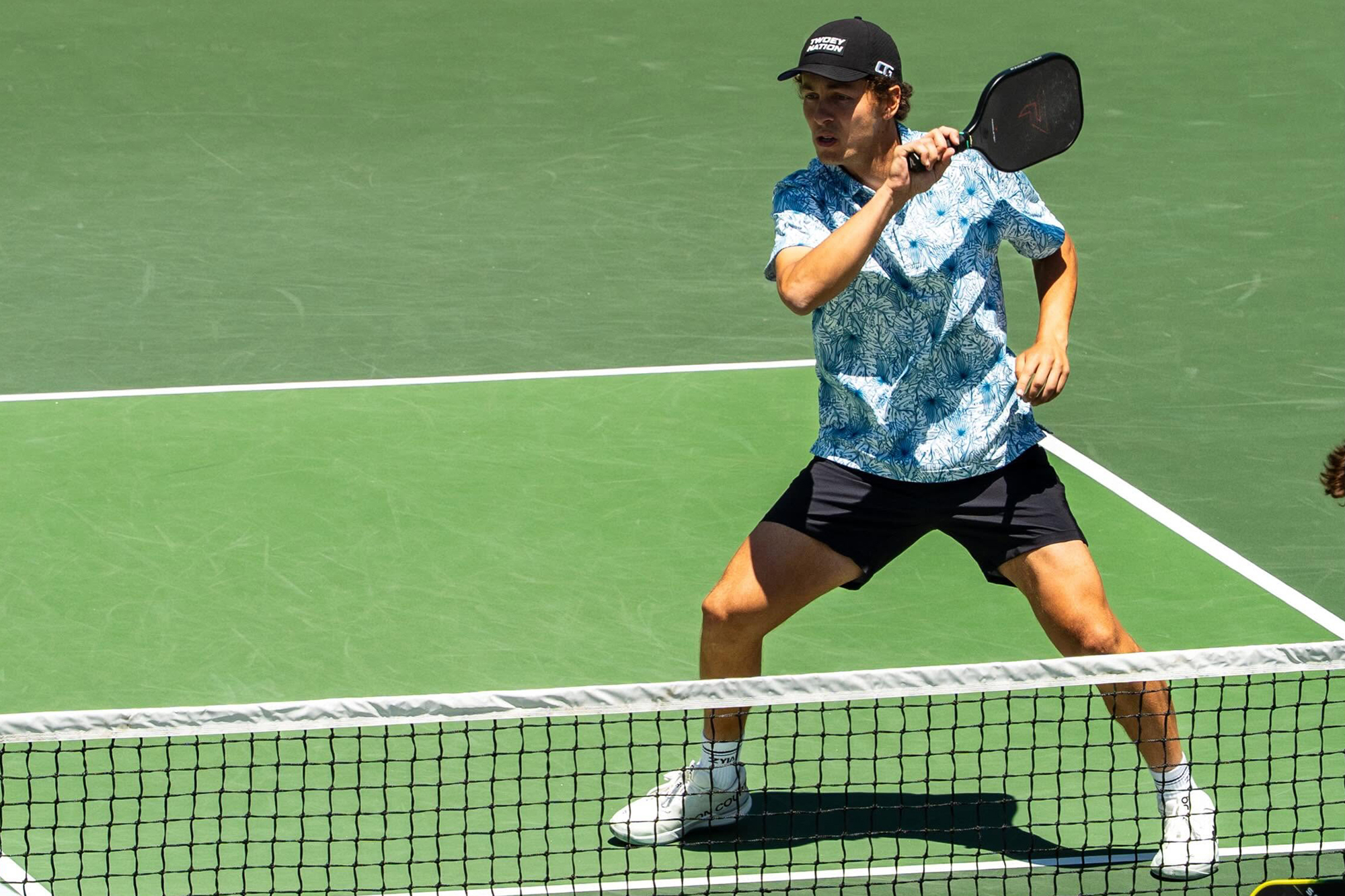
In this dinking pattern, there are three things I am looking for. First, once my opponent’s shoulders turn, I slide over because he is going to be out of position. Now I can look for the opportunity to attack.
Second, I lean in on the kitchen line with my nose over my toes. I want to be in an aggressive position and ready for the next ball rather than waiting until the opportunity appears before trying to move into position.
The third thing, I focus on is keeping my chest from collapsing. I see players drop their chest when they are looking to attack the next ball. When your chest goes down, the ball typically follows the momentum of your chest.

Most importantly, I do not force the attack. If the opportunity is not there on the first ball and I do not feel comfortable attacking, I stay in the pattern and continue looking to lean in. Eventually, I am looking for the ball I can attack.
2. Speed-Up Pattern: Follow the Momentum
The second pattern is a crossbody speed-up followed by a putaway volley. This pattern is about following the momentum of the ball.
The ball naturally wants to continue traveling in the same direction it was hit. When I speed up my backhand crossbody to my opponent, I can anticipate where the next ball is likely to come and position myself accordingly.
Instead of waiting to see where the response goes before reacting, I can anticipate that next ball ahead of time and be prepared to follow the speed-up with the putaway volley.

3. Serving Pattern: Serve Plus One
The third pattern is a serve-plus-one pattern. I hit a wide serve and then look to attack the next ball into the open court.
This can be particularly effective when opponents are unwinding the stack. A big serve that pulls the opponent wide can produce a shorter return. Once I see that shorter ball, I move forward, attack the open court and look to put away the next ball.
The serve is only the beginning of the pattern. I am using it to create the opportunity to be aggressive on the third ball.
4. Return and Pinch: Take the Next Ball
The fourth pattern is the return and pinch. My partner, who is the returner, sends the return down the line. I slide toward the middle and look to take the next ball.
Doing this alleviates my partner from having to hit the fourth ball while moving into the court. It also gives me the opportunity to contact the ball at a higher point on its arc and potentially put the shot away.
It is a simple pattern, but it creates a clear plan for what happens after the return. My partner knows where to send the ball, and I know what I am looking to do next.
The Twoey Takeaway
Once you understand these four patterns, the next step is taking them from practice into actual points. Each one gives you something specific to look for rather than entering a point without a plan.
The dinking pattern helps you recognize and wait for the opportunity to attack. The crossbody speed-up allows you to anticipate the direction of the next ball. The serve-plus-one pattern creates an opportunity to attack the open court, while the return and pinch gives the non-returning partner the chance to take the fourth ball at a higher point.
Using these patterns gives you a game plan when you get into the match that really counts and the pressure is riding on it. Instead of treating each shot as an isolated decision, you can start anticipating what comes next and be ready for the next ball. ●
Train with Connor Garnett
Take your game beyond the pages of The Pickleball Weekly and onto the court with PPA Tour and Major League Pickleball Pro Connor Garnett. Through two-day camps, private instruction, virtual coaching, and the Twoey Pickleball Lab, Connor helps players of all skill levels improve faster with small-group instruction focused on strategy, movement, decision-making, and his signature two-handed backhand. His clinics have been held throughout the United States, Mexico, the Cayman Islands, Japan, and Picklr locations across North America. Learn more at ConnorGarnett.com.

Read the full magazine issue! Click below, then tap Full Screen for the best reading experience.
