
5 Big Mistakes Most Players Make
By Connor Garnett
September 2, 2026 • 9 min read
THERE ARE A few mistakes I see players make over and over again, regardless of whether they are relatively new to pickleball or have been playing for years.
Most of them are not complicated to fix. In fact, the common thread across all five is keeping things simple. Better balance, more efficient movement and smarter shot selection can solve a lot of problems without requiring you to completely change your game.
Here are five of the biggest mistakes I see and what you can do differently.
1. Moving Through the Shot
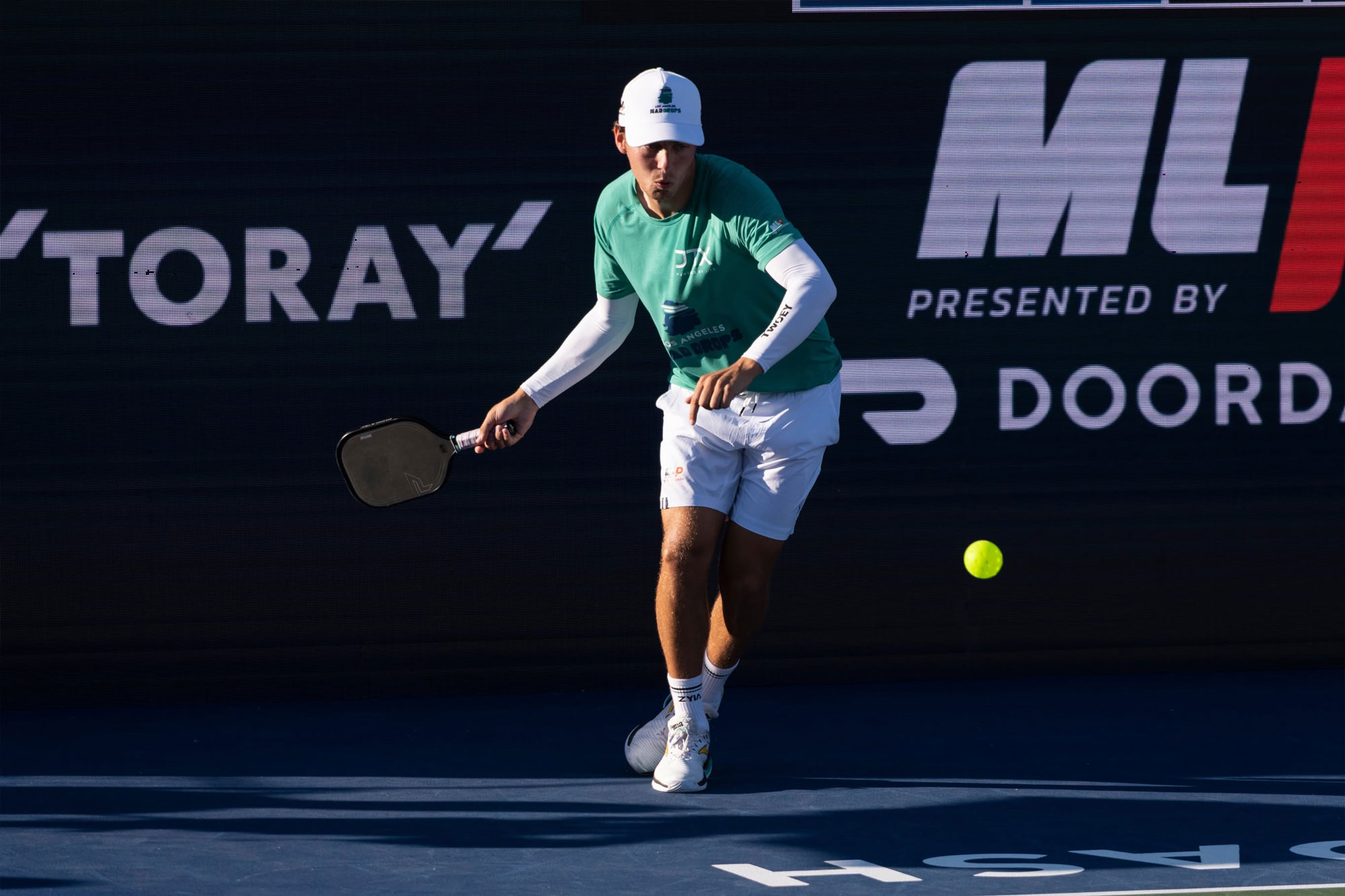
One of the most common problems is not being balanced at contact. Players are still moving as they hit the ball, allowing their body weight to carry them through the shot instead of establishing a stable position first.
When you are moving through contact, you have less control over where the ball goes and it becomes harder to recover for the next shot. If your opponent speeds up the next ball, you may still be trying to regain your position.
Instead, plant your legs and get balanced before contact. When I am balanced as I hit, I can control where I am sending the ball and immediately prepare for whatever comes back.
This applies on offense and defense. You should always anticipate that the next ball is coming back. Staying balanced gives you the ability to respond when it does.
2. Working Too Hard for Power
Another mistake I see is players trying to generate power almost entirely with their arms.
Power should come from the kinetic chain, beginning with your legs, hips and core. Your swing can then stay much more compact.
This is something I have worked on in my own forehand. If I take too big of a swing, I am working harder than I need to. When I engage my lower body and allow my hips to help bring the paddle through, I can accelerate through the ball more efficiently.
When your arms and body are moving too much, the stroke becomes erratic and you may actually generate less pace.
Stay low, engage your legs, hips and core, and keep the swing compact. The less unnecessary movement you introduce, the easier it becomes to create controlled power.
3. Going for Too Much
A high ball does not automatically mean you should hit it as hard as possible.
I see players get an attackable ball and immediately focus on power instead of placement. The problem is that a hard shot landing in the middle of the court begins losing energy before it reaches an opponent near the baseline. You may have hit the ball hard, but you have also given your opponent an opportunity to handle it.

Move Your Feet to Maintain Pressure
Keeping opponents back isn’t only about your paddle. Your feet have to put you in position to execute the shot you want.
If the ball pulls you wide or forces you to adjust, move with it. Getting your body into the correct position allows you to take the ball in front, control your direction and continue applying pressure.
This becomes especially important when targeting an opponent’s feet. The target is moving, which means your positioning may need to change too.
As the rally develops, look for the progression. Early in the transition, I may be focused almost entirely on the feet. If my opponent gives me a higher ball, I can become more aggressive, keep them pinned back and eventually look for an angle or winner.
You don’t have to end the point with the first opportunity. Sometimes the best offense is simply refusing to let your opponent get comfortable.
Expect the Sixth Ball
This is probably the part players forget most often.
You hit an aggressive fourth ball and think you have done your job. Then your opponent, who is stuck in transition, bails out with a swinging volley or speedup. You aren’t ready, the ball gets through and suddenly the advantage is gone.
After you hit the fourth, expect the sixth. Assume the ball is coming back and have your paddle ready to counter.
This is where your position at the kitchen gives you a major advantage. Because you are closer to the net, you can create a much sharper downward trajectory. Your opponent in the midcourt has a more difficult job. They have to clear the net from farther away while trying to keep the ball low.
If they speed the ball up from transition, be prepared to get the next one back down at their feet.
The fourth shot creates the pressure. Our sixth shot often maintains it.
Own the Advantage
Getting to the kitchen line gives you an advantage, but what you do once you’re there determines whether you keep it.
The goal isn’t to hit every ball harder or try to end the point immediately. It’s to make your opponents uncomfortable while you stay balanced and in control. Take the ball at its highest point when you can, make the fourth shot intentional, and always be prepared for the next ball to come back.
The more pressure you create, the harder your opponents have to work for every step forward. Keep finding their feet, keep them moving, and don’t give them an easy path to the kitchen.
Once you start thinking one shot ahead instead of simply reacting to the ball in front of you, you’re no longer just standing at the kitchen line. You’re owning it.
Placement can be much more effective.
If you create an angle, your opponent has farther to move. If you hit for depth, you can keep your opponent back and prevent them from moving forward to attack.
The shot may be slightly slower, but it can create a much more difficult ball to return.
On putaways, think placement over power. Look for angles and depth rather than assuming more speed will produce a winner.
4. Popping the Ball Up
Pop-ups often happen because there is too much movement at contact. Players lift their bodies or use too much wrist, particularly when they are trying to handle pace.
When the ball is coming quickly, stay low and level rather than rising as you make contact. Your wrist should remain stable and your body compact.
One way to visualize this is to imagine balancing a cup of water on your head. If you suddenly lift or make excessive movements, that cup is going to spill.
The same movement can send the pickleball higher than you intended and give your opponent an attackable ball.
Keep your body quiet, stay low and make the contact as controlled as possible.
5. Getting Overpowered by Drives
Everyone eventually runs into the player who wants to drive everything.
When someone is hitting hard at you, one of the worst things you can do is lean backward. Once your weight begins moving away from the ball, it becomes difficult to counteract the incoming pace and maintain control.
I like to think nose over toes.
Keep a slight forward lean, stay compact and make sure your wrist is stable. You want to absorb the incoming pace without allowing the ball to overpower your position.
You do not need a big swing to send that pace back. If your body is balanced and moving forward rather than backward, you can use the pace that is already coming at you.
The Twoey Takeaway
All five mistakes come back to a similar idea: you do not need to work harder to play better.
Stay balanced at contact. Generate power from your lower body rather than forcing it with your arm. Choose placement instead of trying to overpower every ball. Stay low and compact to prevent pop-ups. And when someone drives the ball at you, keep your weight forward instead of retreating.
The more efficient you become with your movement and shot selection, the easier it is to stay prepared for what happens next.
Pickleball moves quickly. Your job is not simply to hit the ball in front of you. It is to make a good decision, execute it under control and be ready when the next ball comes back. ●
Train with Connor Garnett
Take your game beyond the pages of The Pickleball Weekly and onto the court with PPA Tour and Major League Pickleball Pro Connor Garnett. Through two-day camps, private instruction, virtual coaching, and the Twoey Pickleball Lab, Connor helps players of all skill levels improve faster with small-group instruction focused on strategy, movement, decision-making, and his signature two-handed backhand. His clinics have been held throughout the United States, Mexico, the Cayman Islands, Japan, and Picklr locations across North America. Learn more at ConnorGarnett.com.
About Connor Garnett
Ranked fifth in the world in men’s singles, Connor Garnett is a professional pickleball player competing on both the PPA Tour and Major League Pickleball. Known for his athleticism, analytical approach, and his signature two-handed backhand known as the “Twoey”, Garnett has established himself as one of the sport’s most respected competitors and educators. Through his instructional series, Twoey’s Tips, he shares the technical insights, strategies, and training methods that have helped shape his professional game, giving players of all skill levels practical advice to elevate their performance on the court.

Read the full magazine issue! Click below, then tap Full Screen for the best reading experience.
