
Connor Garnett on Playing the Long Game
By Adriana Falco
August 5, 2026 • 17 min read
IN A SPORT often defined by raw emotion and frantic pace, Connor Garnett operates like a high-frequency trader on the court. The game extends far beyond a simple endorsement.
After an accomplished tennis career that included an undefeated high school record in Washington, Division I competition at Santa Clara University, and a year playing in England while earning his Master’s degree in Finance and Investments from the University of Nottingham, Garnett appeared to have found the safe path. He accepted a position in investment banking, joining a profession known for stability, prestige, and long-term financial opportunity. It was a career many people spend years hoping to achieve.
Then pickleball happened.
What began as an introduction to a new sport during a pandemic quickly became something much more. Weekend tournaments turned into medal-winning performances. Local competition quickly became national competition. The analytical mindset once used to evaluate financial investments found a new challenge in dissecting the strategic layers of pickleball.
Eventually, Garnett faced a decision that many aspiring athletes only dream about. Should he continue climbing the corporate ladder, or take a chance on building a career in a sport that was still in its infancy?
He chose the paddle. Today, that gamble has paid off.
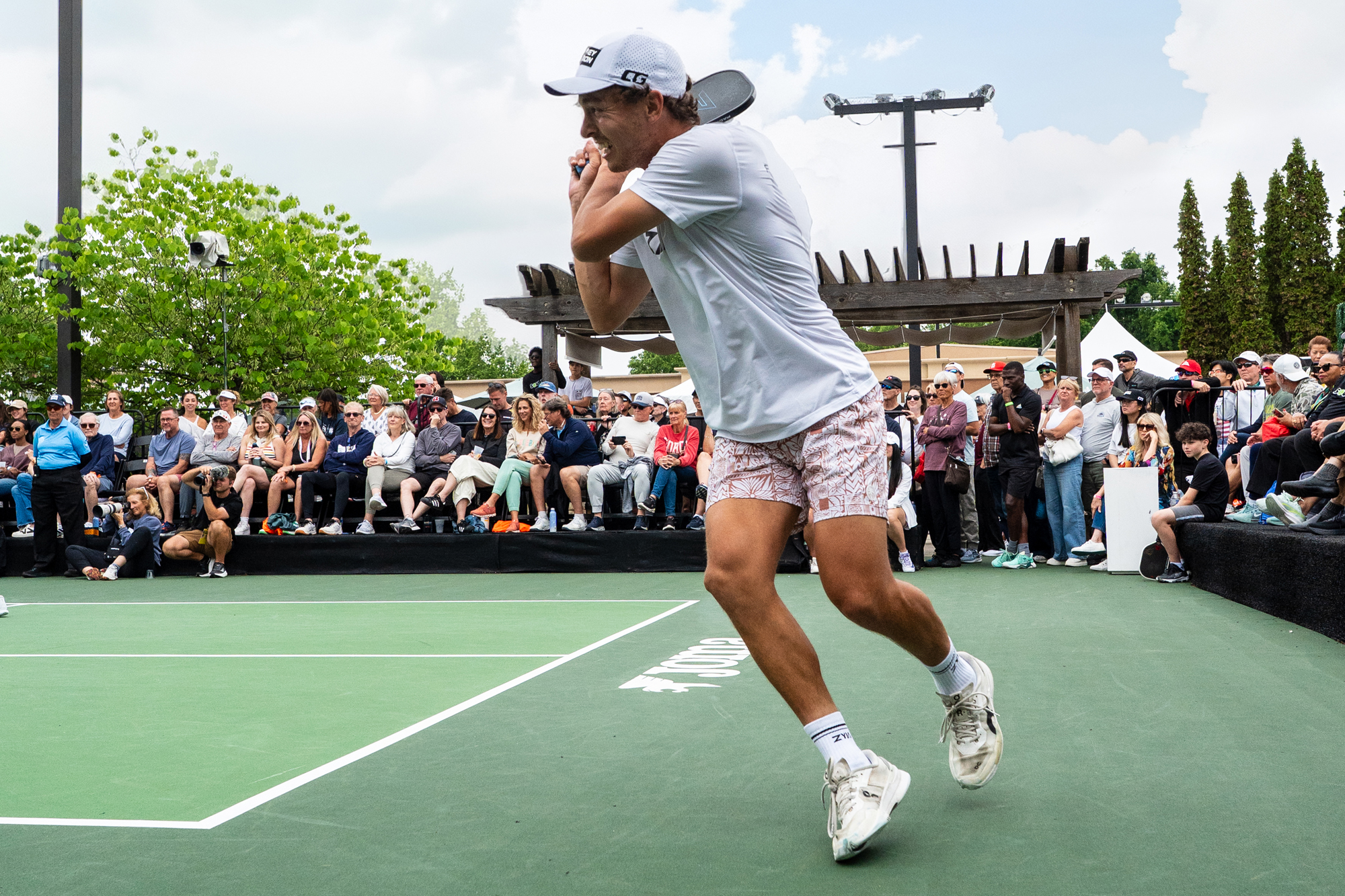
Ranked No. 5 in the PPA men’s singles rankings and playing on one of the top Major League Pickleball teams, Garnett has established himself as one of the premier players on the PPA Tour and MLP, climbing into the world’s elite with a game built on explosive athleticism, relentless competitiveness, and perhaps the most recognizable two-handed backhand in professional pickleball. His signature shot, affectionately known as the “Twoey,” has become one of the sport’s most feared weapons while inspiring countless players to rethink what’s possible from the backhand side of the court.

Beyond the court, Garnett has built one of pickleball’s most diverse business portfolios through corporate sponsorships, strategic partnerships, facility development, investing, and entrepreneurship, demonstrating that success in today’s pickleball landscape extends well beyond tournament results.
His corporate sponsorships include Paddletek, where he competes as one of the brand’s premier professional athletes, and ZYIA Active, his official apparel sponsor and the home of his “Twoey Nation” collection inspired by his signature two-handed backhand. Beyond sponsorships, Garnett is an advisor, investor, and brand ambassador with Ballers, and serves as a strategic advisor supporting The Picklr Canada’s expansion.
His entrepreneurial approach also extends to personal branding. Through his partnership with ZYIA Active and Pickleball Central, his Twoey Nation hats and Towey towels are sold at PPA and MLP tournaments, making him the only professional player with dedicated merchandise available alongside official team apparel. Both products sold out during MLP Orlando, reflecting the continued growth of the Twoey Nation brand.
When we sat down during MLP stops in St. Petersburg and Orlando, our conversations weren’t about rankings and medals. Instead, we talked about his upbringing in Seattle, baseball, psychology, entrepreneurship, investment banking, travel, family, and why authenticity and the lightheartedness he brings to the game have become defining parts of his court presence. Plus, we chatted about his recent transition to the Los Angeles Mad Drops.
Like many elite athletes, Garnett’s story began long before anyone knew his name.
A Conversation with Connor Garnett
Q: Most people know you as a pickleball player, but baseball and tennis actually came first. How did you get your start in athletics?
Garnett: Baseball was my first love. My dad taught me to bat left-handed because you’re a step closer to first base, and since most pitchers are right-handed, he figured it gave me a slight advantage.
One of my baseball teammates also played tennis, and I remember thinking, ‘Let me see what this is all about.’ That’s how I first got into tennis. By the time I was 12 or 13, I had to decide which sport I wanted to pursue. I chose tennis, and everything kind of took off from there.
Looking back, learning to bat left-handed probably shaped my entire athletic career. My backhand always felt natural because of those baseball mechanics. My forehand took a lot of work, but my backhand just seemed to come naturally. Eventually, that became the “Twoey.”
Q: Your “Twoey” backhand is iconic. How did that develop?
Garnett: It was inspired by watching the women’s tour.
I saw how players like Anna Leigh Waters were attacking balls off the bounce at the kitchen line, and I realized that style could also work in the men’s game as well. Since my backhand had always been one of my biggest strengths from my tennis background, it naturally evolved into my signature shot. I think the men’s game has become much more aggressive because players are now willing to attack off both wings instead of just their forehand.

Q: When did you first discover pickleball?
Garnett: My aunt had a pickleball court at her beach house when I was about 10, but I had no idea what the kitchen was or even how the game was supposed to be played. We’d go out once a year with wooden paddles and basically try to hit winners so the ball would roll down the hill and the other person had to chase it.
I also played it in PE class, but it wasn’t until I moved to Orange County that I really started playing and learned the actual rules. That’s when I realized, “Oh, this is pickleball.” It’s kind of ironic because the sport started on Bainbridge Island, not too far from where I grew up.
Q: What made you pivot from a corporate career in investment banking to a career in pickleball?
Garnett: I was getting ready to play a full schedule of ITF World Tennis Tour Futures events in Egypt and across Africa when COVID-19 hit and everything shut down. Instead, I took a job in investment banking in Southern California. The pickleball scene out there was incredible, so I started playing and quickly got hooked. Honestly, if I hadn’t made that move, I probably wouldn’t be playing professionally today.
I entered a 4.0 tournament in San Clemente and got beat by players twice my age. It was humbling, but it also opened my eyes to the strategic depth of the sport. I realized pretty quickly that pickleball wasn’t just easier tennis.
What appealed to me about pickleball was the strategy. Tennis is incredibly technical, but pickleball constantly challenges you to solve problems, recognize patterns, and make decisions. That strategic side really matched the way my brain was wired from finance.
When deal flow at my firm began to slow, I started playing even more. As I began winning consistently, I realized I had a real opportunity and made the leap to professional pickleball in 2022.
Q: How did your parents react when you left your office job to play pickleball full-time?
Garnett: At first, my mom definitely thought I was a little crazy. I’d gone to college, earned my master’s degree, landed what most people would consider a great job, and then suddenly I was saying, “I’m going to play professional pickleball.” It was definitely a surprise.
But my parents have always been incredibly supportive. They come to tournaments whenever they can, especially on the West Coast. More than anything, they’ve always wanted me to pursue something I genuinely love, and I’m grateful they never tried to force me down a particular path. I think that’s one of the reasons I still loved tennis after college. It was always my choice.
Q: One thing that stands out when people watch you compete is your personality. You smile. You joke on the court. Even in the biggest moments, you seem completely relaxed. Is that how you actually feel?
Garnett: It’s funny because people always say I look relaxed. The truth is, internally, I’m probably not nearly as relaxed as they think. I’m constantly processing what’s happening and making strategic decisions.
I still feel pressure like everyone else. The difference is that I remind myself how much I genuinely enjoy being out there. When you’re enjoying what you’re doing, your body language starts to reflect that. Sometimes your body can even help pull your mind into a better place. If you can keep your body language relaxed, it actually helps your mind stay calm, and that’s essential when you’re making decisions under pressure.
Q: It’s become part of your brand. Fans don’t just appreciate your game. They enjoy watching you compete because they feel like they’re seeing the real Connor Garnett.
Garnett: I appreciate that. A lot of who I am comes from my parents. One value my dad always emphasized was integrity. The only time I can remember him really getting upset with me was when I didn’t keep my word. That lesson has stayed with me.
I try to carry that onto the court. Nobody’s perfect, but I believe the way you compete is one of the truest reflections of your character. Kids are watching. Fans are watching. If I can set a positive example through the way I conduct myself and compete, then that’s something I’m proud of.

Q: You were briefly drafted by MLP Columbus Sliders then spent the past two seasons with the Utah Black Diamonds. Then, on July 20, you were traded to the Los Angeles Mad Drops who are one of the top seeded teams in 2026 MLP standings. When did you first learn the trade was happening, and what was your initial reaction?
Garnett: I found out about the trade a few days ahead of time, and it was obviously a mix of emotions. I’m super excited to be part of the Mad Drops and to have the opportunity to help the team hopefully win a title. Utah had been pretty much the only MLP team I’d played for, so it was sad to leave, and I’m thankful for all the opportunities they gave me.
Q: You made your Mad Drops debut just last week at MLP Orlando, stepping onto the court with Catherine Parenteau as your new mixed doubles partner and on a roster that also features Ben Johns. The energy you and Catherine bring to the court as two highly ranked players teamed up together is powerful. What was it like putting on that new jersey for one of the elite MLP teams, and how quickly did your partner chemistry with Catherine develop?
Garnett: Stepping out with the Mad Drops was amazing! The blue and green colors and being part of an LA team were awesome. They do a great job cultivating a strong fan base. The ownership group, the team, and Ben as captain all welcomed me to the team, and I’m excited to put in the work this week to get ready for the MLP Playoffs in Newport Beach. I also went out a few days early to train with CP in Florida, and I think that helped us find our rhythm and continue to grow as a team.
Q: You’ve competed against Ben Johns for years. Now you are on the same team. What’s different about having him as your partner instead of your opponent?
Garnett: Having Ben as a teammate instead of an opponent is great. He’s a tactician who sees the court incredibly well and provides great leadership with strategy and tactics. MLP is funny in a way because you’re battling a player week in and week out, and then suddenly you’re sharing strategies during timeouts. It’s been a great experience, and I’m impressed by the role he’s taken on to help guide and grow the team.
Q: Who are the people who have influenced your mindset as you’ve climbed the rankings?
Garnett: I’ve gotten really into sports psychology. I’d say my top influences are Matthew McConaughey, Chris Williamson, specifically his Modern Wisdom podcast, and Andrew Huberman.
They all offer different lenses.
McConaughey gives me a philosophical perspective on life. Williamson’s podcast challenges the way I think, and Huberman explains the science behind stress, focus, and performance.
Understanding how the brain responds under pressure has helped me become a better competitor, and when you blend those perspectives together, that’s where you begin building the mindset of an elite athlete.
Q: You’ve also taken pickleball around the world through clinics. What draws you to that side of the sport?
Garnett: That’s honestly one of my favorite parts of the job. I love the community and the evolution of pickleball. It’s still such a young sport, and it’s growing all over the world. Being able to share the knowledge that’s helping the game evolve is incredibly rewarding.
One of the greatest gifts pickleball has given me is the opportunity to see the world. I often combine clinics with travel, turning what might have been a vacation into an opportunity to teach, compete, and experience new places. I’ve had a front-row seat to the sport’s international growth, and becoming the first men’s Triple Crown winner on the PPA Asia Tour was especially meaningful because you could feel that momentum building.
Whether I’m in Japan, Mexico, or the Cayman Islands, the strategic side of pickleball is universal. The game challenges you to think, solve problems, and adapt, and I really enjoy that. It’s also introduced me to parts of the world I probably never would have visited otherwise while allowing me to connect with people from so many different cultures.
It’s exciting to imagine where the sport will be internationally five or ten years from now.

Q: It sounds like your entrepreneurial mindset started long before pickleball. Tell us about your first business venture.
Garnett: When I was about 12 years old, I started stringing tennis rackets at tournaments. I thought I’d built this incredible little business because I’d make $100 or $200 over a weekend. Looking back, I realized my dad had probably spent more than that on the hotel and travel just getting me there, but at the time I thought I was an entrepreneur. I guess I’ve always enjoyed finding ways to buIld something outside of just competing.
Q: Fast-forward to today, you’ve become known not only as one of the world’s top players but also as one of pickleball’s most entrepreneurial athletes. Your portfolio spans corporate sponsorships, strategic advisory roles, investing, facility development, and your own Twoey Nation brand. Was building a business beyond competition always part of your long-term strategy, and how do you balance those responsibilities while remaining one of the world’s top-ranked players?
Garnett: I’m a big believer that any partnership has to be organic. There are three things I look for in every partnership. One, I genuinely have to enjoy working with the people. Two, it has to be a win-win, and, three, I want it to be long-term.
Another thing that’s important to me is putting in the work. I want every partnership to succeed because both sides are invested in making it successful. I’m upfront about what I bring to the table, and I’m looking to build relationships that grow together over time, not one-year deals that disappear.
Q: Ballers is redefining what a modern social sports club can be, and you’re involved as an advisor, investor, and brand ambassador. What attracted you to the project, and what role are you playing in helping shape its growth?
Garnett: Ballers has been an exciting opportunity. The ownership group includes some incredibly accomplished people from investment banking, Equinox leadership, and professional sports. Andre Agassi is part of the ownership group, and it’s just a group that’s committed to excellence. For me, that was really appealing.
The Philadelphia flagship immediately stood out to me because it isn’t just another pickleball club. It’s creating a premium social sports experience that brings together pickleball, padel, dining, fitness, and community under one roof. That’s where I believe the industry is headed.
I’m involved through content creation, player events, and helping grow the pickleball side of the business. It’s exciting because it aligns with how I see the future of the sport and the kind of experience players are looking for.
Q: You’re also involved with The Picklr’s expansion into Canada. Tell us about that partnership.
Garnett: Canada is fascinating because the climate naturally creates demand for indoor facilities. It makes the franchise model very attractive there. That relationship happened very organically, which is how I like all my partnerships to develop. One of the investors became a friend through pickleball, introduced me to the group, and we immediately connected.

Q: As you look ahead, what excites you most about the next chapter of your career?
Garnett: I’m excited to keep growing in every aspect of the sport. I want to keep competing at the highest level, continue building meaningful partnerships, teach more clinics around the world, and help grow pickleball internationally. The sport is still so young, and it feels like we’re only scratching the surface of what’s possible over the next five or ten years.
Playing the Long Game
For Garnett, the “Twoey” represents far more than a signature shot. It reflects the same philosophy that has guided every chapter of his career: embrace calculated risks, continue learning, adapt to change, and never stop evolving. Whether competing on championship courts, teaching clinics around the world, or helping shape pickleball’s future through business ventures, Garnett continues to play the long game.
His move to the Los Angeles Mad Drops is simply the latest chapter in a career defined by curiosity, calculated risks, and continual growth. Whether competing for championships, building businesses, or teaching clinics across the globe, Connor Garnett continues to embrace every opportunity the sport has given him. And if the past few years are any indication, he’s still only beginning to discover where pickleball will take him next. ●
About Adriana Falco
Adriana Falco is the Founder and Editor-in-Chief of The Pickleball Weekly, a global digital magazine reaching readers in over 125 countries across six continents. A pickleball player since 2012, she combines more than 25 years of executive leadership with a passion for storytelling that captures every facet of the sport. With a career from international technology companies to major news organizations, Adriana covers the people, businesses, innovations, and global trends shaping pickleball’s future, with a mission to connect and inspire the worldwide pickleball community through credible journalism and compelling stories. She is also the author and creator of the Pickleball Pip children’s book series.

Read the full magazine issue! Click below, then tap Full Screen for the best reading experience.
