Strength Runs in the Family
After two surgeries threatened Valerie Simon’s athletic future, the Simon family transformed her remarkable recovery into Serve for Strength, a nonprofit bringing hope and opportunity to others.
By Adriana Falco
November 25, 2026 • 19 min read
Three sisters. Three different strengths. One shared mission
For months, Daniella Simon watched her teenage daughter struggle to do something most people take for granted: walk. Valerie Rose Simon, once a nationally competitive junior tennis player with an exciting athletic future, was confined to a wheelchair following major foot surgery. Her days revolved around medical appointments, rehabilitation and the painstaking process of rebuilding strength. The trophies and tournaments that had once defined her childhood seemed impossibly distant.
“For me as a mom, when your daughter has titanium put in, the foot is above the heart, you have no idea if she’ll walk again, and that lasts for months,” Daniella recalls.
Valerie was just 15 when she underwent her first surgery. What began as an injury sustained during a tennis match had become a prolonged medical ordeal, one that would eventually require two major operations and leave her with four titanium rods in her feet. The physical pain was considerable, but the uncertainty was equally devastating. Would she walk normally again? Could she return to sports? What would happen to the tennis career she had spent years building?
For Daniella, there were no easy answers. She could advocate for her daughter, seek medical expertise and support her through rehabilitation, but she could not guarantee the outcome. For Valerie, every small milestone required patience and determination, from learning to bear weight on her foot to taking her first steps without assistance.
Neither could have imagined that the experience would eventually lead Valerie to professional pickleball, inspire her two younger sisters to become nonprofit founders and unite their entire family around a mission to help others facing medical challenges.
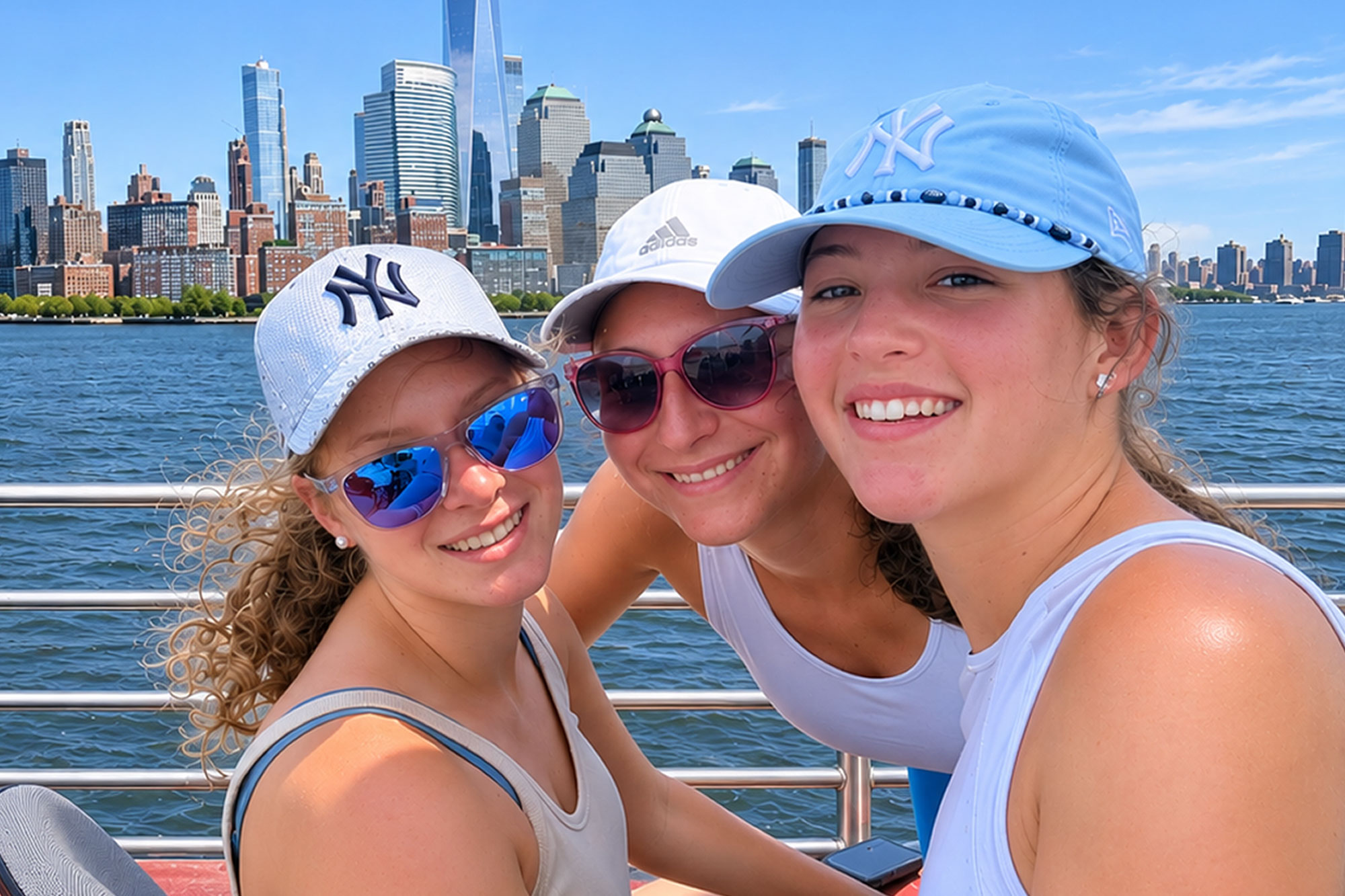
Today, Valerie, 18, is a professional pickleball player signed with the PPA Tour, competing alongside her younger sister Victoria, 16, who goes by Tori. Their sister Vanessa, Victoria’s twin, is a competitive golfer and high school Conference and District champion. Together with their mother, the three sisters founded Serve for Strength, a Tampa Bay-area nonprofit that uses pickleball, golf and community events to raise funds for medical research, expand access to sports and support people facing physical and financial hardships.

The foundation grew from Valerie’s determination to find meaning in an experience she never would have chosen. But what makes Serve for Strength extraordinary is the family behind it, four women with different personalities, talents and responsibilities who discovered that their greatest strength comes from working together.
When Everything Changed
Sports had always been an important part of the Simon household. Born in New York City and raised on Long Island, the three girls grew up playing tennis, encouraged by parents who recognized their athletic abilities and supported their interests.
Daniella remembers noticing Valerie’s remarkable coordination when she was barely a year old. Even as a toddler, she seemed naturally gifted at throwing and catching. As she grew older, tennis became her passion, and she developed into a nationally competitive junior player.
Victoria followed a similar path, progressing from recreational lessons to tournament competition, while Vanessa also played tennis before eventually discovering her love of golf.
In early 2021, the family relocated to the Tampa Bay area. Florida’s year-round playing conditions provided new opportunities for the girls to train and compete. Valerie quickly distinguished herself, earning recognition in prominent junior competitions, including Bobby Curtis and national clay-court and hard-court events.
Her future appeared promising until an ordinary moment during a tennis match changed everything.
A stray ball rolled onto Valerie’s court. She stepped on it, injuring her foot and experiencing immediate pain. She was unable to finish the match, but the full extent of the injury would remain unclear for months.
According to Valerie and Daniella, an initial orthopedic evaluation did not identify a fracture. Despite persistent pain, Valerie was reassured that nothing was wrong. She attempted to return to tennis, relying on ice, supportive taping, physical therapy and periods of immobilization. Instead of improving, her condition deteriorated.
Some days, the pain was so severe that she could barely walk. Yet the uncertainty continued, with conflicting medical opinions and no clear explanation for why the injury was not healing.
Daniella refused to accept that her daughter simply had to live with the pain. She continued seeking answers, consulting specialists and requesting additional imaging. The experience was frustrating and emotionally exhausting, particularly as Valerie watched her peers continue training and competing while her own athletic future remained uncertain.
An unexpected telephone conversation on Mother’s Day in May 2023 finally provided a turning point.
Daniella called Judith Hendrix, a former caregiver who had helped look after her father-in-law, simply to wish her a happy Mother’s Day. During the conversation, Judy mentioned that she had taken a new position at the Hospital for Special Surgery in New York City, working with orthopedic foot and ankle surgeon Dr. Mark Drakos.
Daniella immediately explained Valerie’s situation. Judy helped arrange an appointment, and within days, mother and daughter were on a plane to New York.
Dr. Drakos reviewed Valerie’s previous medical imaging and determined that she had a serious injury to the navicular bone, a small but essential bone in the foot. According to the family, the fracture had not healed properly and required surgical stabilization.
In May 2023, Valerie underwent internal navicular fixation surgery, with two titanium rods implanted to stabilize the bone.
The operation offered hope, but it also marked the beginning of an exhausting recovery. Valerie spent months in a wheelchair, gradually progressing to a scooter, crutches and eventually walking independently. Rehabilitation included blood flow restriction therapy, a technique designed to help rebuild muscle strength while limiting stress on the injured limb.
Daniella coordinated appointments, traveled between Florida and New York and worked closely with Valerie’s rehabilitation team. Vanessa traveled to New York to help care for her older sister, while Victoria continued her own training and competition. The entire family adjusted its routines around Valerie’s recovery.
Eventually, Valerie returned to tennis and even won a large tournament – The Mayor’s Cup in Georgia. After months of uncertainty, it seemed that the most difficult chapter might finally be behind her.
Then her other foot began to hurt.
According to the family and surgeon, the prolonged stress placed on Valerie’s opposite foot during her initial injury and rehabilitation, combined with an earlier injury, contributed to another serious navicular problem.
In February 2024, Valerie underwent a second internal fixation surgery. Two additional titanium rods brought the total to four.
For a teenager who had already spent months fighting to regain her mobility, the prospect of starting over was devastating.
But Valerie was determined not to let the experience define her. She began calling herself the “Bionic Girl,” embracing the titanium rods in her feet as symbols of resilience rather than reminders of everything she had lost.

The nickname reflected her humor and determination, qualities that helped sustain her through another prolonged recovery. This time, the family knew more about what to expect. Daniella obtained rehabilitation equipment for home use, and Valerie continued working with specialists while incorporating water therapy and other treatments into her recovery.
Progress was slow, but she refused to give up.
A Second Chance on the Court
Tennis had shaped much of Valerie’s childhood, and she desperately wanted to return to the sport she loved. Even after her second surgery, she continued hoping that rehabilitation would allow her to resume competitive play.
But the repeated impact and demanding movements of tennis proved difficult for her surgically repaired feet. She tried to return to training, only to find that the pain made it increasingly difficult to complete even a set.
Accepting that tennis might no longer be the right sport was an emotional turning point. Valerie had invested years in developing her skills, competing in tournaments and pursuing athletic goals. Walking away meant reconsidering an important part of her identity.
Daniella, however, remembered something from a family vacation to Hilton Head Island, South Carolina.
During the trip, she had tried pickleball at Palmetto Dunes and enjoyed the game’s combination of movement, strategy and social interaction. When Valerie’s rehabilitation required controlled lateral movement, Daniella wondered whether pickleball might provide a more enjoyable way to practice some of those skills.
She encouraged Valerie to give it a try.
At first, the idea was simply to get her moving again. Valerie was still rebuilding her strength, and no one was thinking about professional competition or tournament rankings.
Then Valerie hit her first pickleball.
“Right as I hit the first ball, I knew I loved it right away,” she recalls.
The sport offered something she had been missing for nearly two years: the opportunity to compete, interact with other players and feel like an athlete again.
“I loved everything about pickleball: the environment, the community, and the ability to compete, because I’m a competitor,” Valerie explains.
The social aspect was particularly important. During her medical treatment and rehabilitation, Valerie had spent significant time in her high school’s hospital homebound education program, limiting opportunities to interact with friends and classmates. Pickleball introduced her to a welcoming community of players from different generations and backgrounds.
She began playing regularly, developing friendships, training with new partners and entering tournaments. Her competitive instincts quickly resurfaced, and what began as rehabilitation evolved into a serious athletic pursuit.
Before long, Valerie wanted a consistent training partner. She turned to Victoria.
Tori was initially skeptical. She was still focused on tennis and had little experience with pickleball. But after entering an early tournament and winning medals, she began to recognize the sport’s competitive possibilities.
“I still wasn’t sure if I liked it or not,” Victoria admits.
Gradually, pickleball won her over. She enjoyed the variety of singles, doubles and mixed doubles, as well as the friendships she developed with other junior players. The sisters began training together more frequently, building on the competitive relationship they had developed throughout childhood.
Their partnership eventually became a professional one.
In 2025, Valerie and Victoria qualified for their first professional tournament together at Virginia Beach, advancing into the main draw before facing established competitors Parris Todd and Hurricane Tyra Black. They continued competing at PPA Tour and Challenger events, gaining experience and developing their on-court chemistry.
On January 8, 2026, both sisters signed with the PPA Tour after a competitive match against Tina Pisnick and Meghan Dizon at the 2026 Daytona Beach PPA.
For Victoria, the milestone marked an exciting progression in her athletic career. For Valerie, it represented something she could scarcely have imagined during the months when walking without assistance seemed uncertain.
The sisters have since competed across the United States and internationally, including the PPA Tour Europe stop in Barcelona, where they finished fourth in women’s doubles. They also earned a professional bronze medal at the PPA Challenger in Portland, Maine, another important achievement in their developing careers.

Their partnership has become increasingly instinctive. They understand each other’s tendencies, communicate constantly and have learned to use their different playing styles to their advantage.
Off the court, they remain sisters, best friends and collaborators, sharing the unusual experience of building professional athletic careers while helping operate a nonprofit organization.
Yet Valerie’s most meaningful accomplishment would emerge from something that happened long before she signed a professional contract.
Turning Pain Into Purpose
During Valerie’s second recovery, a medical bill arrived at the Simon home.
She saw the amount and asked her mother a question that would ultimately change the direction of their lives.
“Mommy, how do people afford this that don’t have insurance?”
The question reflected a realization that had been growing throughout her treatment. Valerie understood that her family had been fortunate to access specialized orthopedic care, travel for medical appointments and obtain advanced rehabilitation services. She had also experienced how difficult it could be to find appropriate treatment, even with a family determined to pursue every available option.
What happened, she wondered, to people without those resources?
The question stayed with her as she recovered. Rather than focusing entirely on the athletic career she had lost, Valerie began thinking about how her experience might help others facing serious medical challenges.
“When I was on bed rest, I had two choices: either I could be depressed about my situation, or I could turn my pain into purpose,” she explains.
She chose purpose.
Daniella was deeply moved by her daughter’s determination. Giving back had always been important in the Simon household. The children had participated in food drives, volunteered in community kitchens and learned from an early age that helping others was a responsibility, not simply an occasional activity.
Still, watching Valerie embrace that philosophy while recovering from another major operation was extraordinary.
“I could have had a teenager that was depressed, and instead she said, ‘Mommy, I have to do something to help people,’” Daniella recalls.
The family approached Dr. Drakos to discuss ways they might support other patients. Their conversations helped shape an initial focus on medical research, particularly research that could improve orthopedic treatment and rehabilitation.
The Hospital for Special Surgery’s Foot and Ankle Research Department became an important beneficiary of the family’s efforts. For Valerie, supporting research offered the possibility of helping patients she would never meet, including people whose circumstances might make specialized treatment difficult to obtain.
The idea grew into a charity pickleball tournament at Saddlebrook Resort in September 2024. It was the beginning of Serve for Strength.
What started as a fundraiser inspired by one young woman’s medical journey gradually developed into a broader family initiative. The organization was formally incorporated in May 2025 and received IRS recognition as a 501(c)(3) nonprofit in January 2026, with Daniella serving as CEO and Valerie, Victoria and Vanessa as co-founders.
Its mission now extends beyond orthopedic research to include community sports programs, adaptive activities and support for people facing medical and financial hardships.
For Valerie, the foundation offered a way to transform an experience she would never have chosen into something capable of making a difference in other people’s lives.
For her sisters and mother, it became a shared purpose that would reshape the family’s future.
Three Sisters, One Mission
Although Valerie’s experience inspired Serve for Strength, the organization is not a one-person endeavor. Each sister contributes her own interests, abilities and personality, creating a partnership that is as much about family dynamics as philanthropy.
Valerie meets with medical associations to decide where the nonprofit donates funds raised. She is focused on community and the foundation’s integration into the community on every level. With this in mind, Valerie also designs each clinic and event around participants’ abilities, skill levels, and DUPR ratings where applicable, and practiced playing from a wheelchair before leading a wheelchair clinic to better understand her students’ experience on the court.
Victoria, who shares Valerie’s professional pickleball career, plays a central role in developing clinics and tournament programming. Together, the sisters create activities suited to different audiences, from beginners learning their first shots to experienced players looking for competitive instruction.
Daniella has learned to trust their expertise. When an organization approaches Serve for Strength about hosting an event, she turns to Valerie and Victoria to determine the most appropriate format.
The sisters ask about participants’ ages, experience levels and objectives before designing a program. Their plans might include instructional clinics, round-robin competition, recreational games or other activities intended to encourage participation and enjoyment.
Victoria also manages much of the foundation’s social media and helps operate the tournament desk at events. Her creativity and enthusiasm for digital content earned her recognition as a Content Queen at a Junior PPA banquet, and she brings those skills to promoting the foundation’s mission.
Vanessa’s contributions are equally significant, although her athletic path has taken her in a different direction.
A competitive golfer and high school Conference and District champion, Vanessa leads Swing for Strength, the organization’s golf division. She has helped expand the foundation’s reach by introducing golf fundraisers and instructional opportunities alongside its pickleball programming.
Her responsibilities also include planning, logistics and coordination with hospitals and partner organizations. Daniella frequently includes Vanessa in meetings, relying on her organizational skills to help manage the many details involved in developing charitable events.
Vanessa’s commitment to the foundation began during Valerie’s recovery, when she traveled to New York to help care for her older sister. Her involvement has since grown into a leadership role that allows her to combine her interest in golf with the family’s charitable mission.

The sisters’ different strengths complement one another. Valerie brings the firsthand experience that inspired Serve for Strength. Victoria contributes competitive pickleball knowledge, communications skills and event management. Vanessa expands the organization’s activities through golf while helping coordinate its broader operations.
Daniella provides the leadership and oversight needed to turn their ideas into functioning programs. She manages partnerships, fundraising, scheduling and the organizational responsibilities that come with operating a nonprofit.
Their father, Jonathan, and younger brother, Zachary, also participate in the family’s charitable activities, reinforcing the sense that Serve for Strength belongs to the entire household.
The arrangement is unusual, particularly because its founders are so young. Yet the sisters have approached their responsibilities with determination, balancing school, athletic training, professional competition and the demands of organizing events.
Daniella is proud of their accomplishments, but she is equally proud of the values reflected in their work. She sees the foundation as an opportunity for her daughters to develop leadership skills, understand the importance of community service and recognize that their abilities can benefit people beyond themselves.
Where Every Serve Matters
Serve for Strength has grown from its inaugural charity tournament into an organization offering a variety of sporting and community programs.
The family has hosted pickleball events in Florida, New York, Georgia and Maryland, as well as an international clinic in Barcelona. Its activities include fundraising tournaments, instructional clinics, wheelchair pickleball programs and opportunities for athletes with different abilities to participate in sports.
In Pasco County, Florida, the foundation offers free women’s pickleball clinics designed to introduce people to the game, encourage physical activity and create opportunities for social connection.
Daniella believes these programs are especially important for individuals who may feel intimidated by organized sports or assume they are too old to learn something new.
“We want people to get off the couch and know that even if you’re 60, you can still learn a new sport and have fun if you’re 80 years old. We want people to be inspired at any age to learn a new sport and improve their lives,” Daniella explains.
The family has also organized a free wheelchair pickleball clinic along with Pasco County and hosted several free Special Olympics training clinics with Pasco County, demonstrating a commitment to making sports accessible to people with a wide range of physical abilities.
For Valerie, these programs carry personal significance. She remembers the isolation of being unable to walk, the difficulty of rebuilding her strength and the encouragement she received when she finally returned to athletic activity.
The foundation’s golf division has added another dimension to its work. Through Swing for Strength, Vanessa has helped organize golf fundraisers that introduce new participants and supporters to the nonprofit’s mission.
The organization also participates in community outreach beyond sports, including food drives and planned toy drives. These efforts reflect the family’s belief that helping people facing hardship can take many forms.
Funding remains one of the greatest challenges.
Although some events generate revenue through registration fees and sponsorships, others are offered at no cost. The organization must balance its charitable contributions with the expenses required to sustain operations, including facilities, equipment and event logistics.
Daniella says the foundation has already made donations to the Hospital for Special Surgery’s Foot and Ankle Research Department, but the family hopes to expand its fundraising capacity and develop partnerships that will allow it to support more programs and beneficiaries.
Their ambition is substantial, but their approach remains personal.
One of Daniella’s favorite stories involves a local resident and friend, Jamie Curtis, who had played pickleball with Valerie. He wore a Serve for Strength shirt to his barbershop, where someone asked about the organization.
After hearing the story, the stranger handed him $50 and asked that it be given to Valerie.
The amount was modest, but the gesture meant a great deal to the family. Someone with no direct connection to Serve for Strength had been moved to contribute simply because another person shared its mission.
For Daniella, the experience reinforced the importance of visibility and community. Every participant, volunteer and supporter has the potential to introduce the foundation to someone new.
It also illustrated something the Simons have come to understand: charitable impact is not always measured by the size of a donation. Sometimes it begins with a conversation, a shared experience or one person deciding to help another.

A Different Definition of Winning
As Serve for Strength continues to develop, Valerie and Victoria are pursuing increasingly ambitious goals on the professional pickleball circuit.
Their schedule includes tournaments across the country and opportunities to compete internationally. Each event presents new challenges as they face established professionals, refine their partnership and gain experience at higher levels of competition.
At the November 2026 PPA Proton Daytona Beach Open, Victoria won her opening women’s singles match against Ava Ignatowich, 11–7, 11–1, before exiting in the next round. In women’s doubles, the sisters challenged fifth-seeded Alix Truong and Jessie Irvine, pushing the opening game to 12–10 before falling in straight games.
The results reflect the competitive environment in which the young sisters are developing. They are learning to navigate professional draws while continuing their education, managing travel schedules and maintaining their responsibilities with Serve for Strength.
For Valerie, the experience is particularly meaningful. Her body has endured two major operations, and she continues to compete with four titanium rods in her feet. The fact that she can step onto a professional court represents an achievement far greater than any single match result.
Yet she is not content simply to participate. Her competitive drive remains as strong as it was during her junior tennis years, and she is determined to continue improving.
Victoria shares that ambition. Their partnership has become a source of motivation for both sisters, allowing them to pursue professional goals while supporting one another through the challenges of competition.
Vanessa, meanwhile, is developing her own athletic future in golf, competing at the high school and junior levels while expanding the foundation’s golf programming.
The three sisters have different athletic aspirations, but their shared charitable work provides a connection that extends beyond individual results.
A tournament victory may last a weekend. A successful fundraiser or community program can have consequences that reach far beyond the court.
It is a distinction the Simons understand because they have experienced both sides of competition: the excitement of winning and the vulnerability of having everything suddenly taken away.
Stronger Together
There is an understandable temptation to define Valerie Simon by what she has overcome. Two major surgeries before her sixteenth birthday, months in a wheelchair, a promising tennis career interrupted and a remarkable return to professional competition would be enough to distinguish almost any young athlete.
But Valerie’s story becomes even more compelling when viewed through the people who surrounded her.
Daniella was the mother who continued searching for medical answers when her daughter’s pain would not disappear. Vanessa was the sister who traveled to help care for Valerie and later developed a new fundraising initiative around golf. Victoria was the younger sister who reluctantly tried pickleball, fell in love with the sport and eventually became Valerie’s professional doubles partner.
Together, they transformed a difficult family experience into an organization that invites others to participate, contribute and find encouragement through sports.
The foundation is still young, and its future will depend on continued community support, partnerships and the family’s ability to expand its programs. Yet the Simons have already demonstrated what can happen when determination is combined with compassion.
For Valerie, the meaning of strength has changed considerably since the days when she was confined to a wheelchair. Once, it was measured in athletic performance, tournament results and the ability to compete against the best players in her age group. During rehabilitation, it was measured in smaller increments: the first time she could put weight on her foot, the first steps with crutches and the day she could walk independently again.
Today, strength means something larger.
It means recognizing that another family may be facing the same uncertainty she once experienced. It means helping someone discover a sport they never thought they could play. It means using a second chance at competition to create opportunities for others.
And it means having a family willing to turn an individual struggle into a collective mission.
The girl who once wondered whether she would walk again now competes professionally beside her sister. Her other sister is building a charitable golf program, while their mother leads an organization inspired by a question Valerie asked during the darkest period of her recovery.
The titanium rods remain, permanent reminders of a journey none of them would have chosen. But they no longer represent only the pain and uncertainty of those difficult years.
They are part of the story of a young woman who found a new sport, a new purpose and an unexpected opportunity to help others.
For the Simon family, the greatest victory is no longer simply getting Valerie back on her feet.
It is helping others find the strength to stand again. ●

Support Serve for Strength
Help the Simon family expand access to sports, support medical research and improve the lives of those facing physical and financial hardships.
Learn More • Donate • Get Involved
Website: serveforstrength.org
Email: admin@serveforstrength.org
LinkedIn: @serve-for-strength
YouTube: @ServeforStrength
Instagram: @ServeforStrength
Facebook: @ServeforStrength

About Adriana Falco
Adriana Falco is the Founder and Editor-in-Chief of The Pickleball Weekly, a global digital magazine reaching readers in over 130 countries across six continents. A pickleball player since 2012, she combines more than 25 years of executive leadership with a passion for storytelling that captures every facet of the sport. With a career from international technology companies to major news organizations, Adriana covers the people, businesses, innovations, and global trends shaping pickleball’s future, with a mission to connect and inspire the worldwide pickleball community through credible journalism and compelling stories. She is also the author and creator of the Pickleball Pip children’s book series.

Read the full magazine issue! Click below, then tap Full Screen for the best reading experience.