Photo credit: Alice Ghent
A Pickleball Diet
Getting better at pickleball sometimes means playing less
By Stephen Pyka
June 24, 2026 • 3 min read
MOST PICKLEBALL PLAYERS believe improvement comes from playing more. More games. More open play. More tournaments. More hours on the court.
While practice is essential, there is another side to improvement that many players overlook. Sometimes the fastest way to get better is to stop playing for a little while.
That may sound counterintuitive in a sport built around repetition, but every player eventually encounters a point where additional court time stops producing meaningful improvement. Instead of refining skills, they begin reinforcing bad habits.
The result is a player who is active but not necessarily progressing.
The Problem with Constant Play
Many recreational players spend the majority of their court time playing games rather than practicing. There is nothing wrong with that. After all, pickleball is supposed to be fun.
The challenge is that games often reward whatever habits currently exist, whether they are good or bad.
A player who consistently drives every third shot may continue doing so because it occasionally works. Another player may rush to the non-volley zone after every return without regard for court position. Others may rely on speed instead of patience, attempting winners when a simple reset would be the smarter choice.
The more these habits are repeated, the more deeply ingrained they become. Without realizing it, players can spend months reinforcing the very behaviors that are limiting their progress.
When the Mind Needs a Reset
Think about the last time you took a vacation.
Often the first few days away from work provide something valuable that is difficult to achieve while remaining immersed in daily routines: perspective.
The same thing can happen in pickleball.
A short break from playing often allows players to step back and evaluate their game more objectively. Without the pressure of immediate competition, they begin to recognize patterns they never noticed before.
Perhaps they are reaching too often instead of moving their feet. Maybe they are speeding up balls that should be reset. Perhaps they are playing too reactively rather than strategically.
Sometimes distance creates clarity.
Cleansing the Pickleball Palate
Professional athletes understand the value of recovery. Muscles need rest. Joints need recovery. The mind also benefits from periodic breaks.
Think of it as a pickleball palate cleanser.
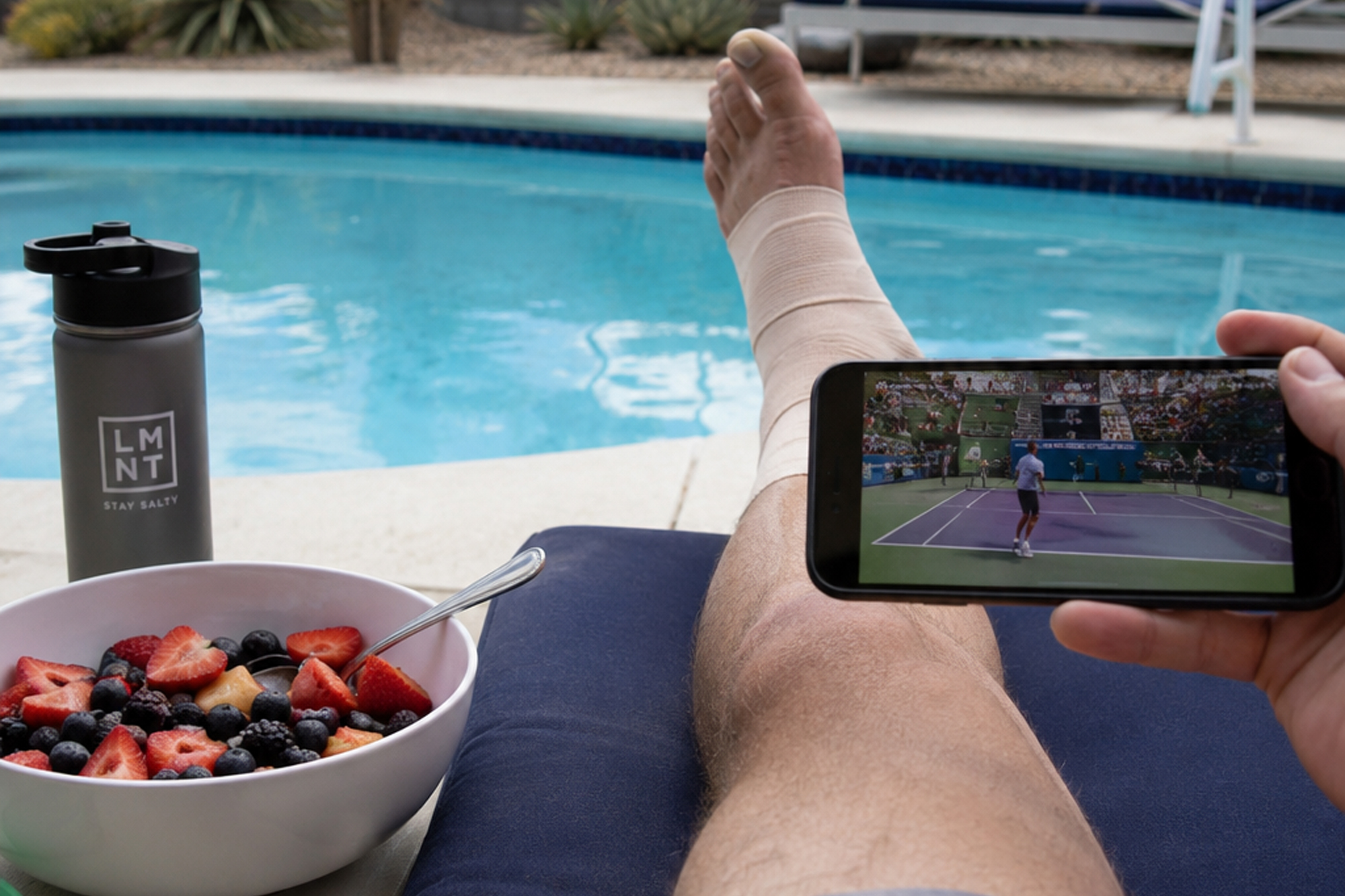
Instead of spending every available hour on the court, consider taking several days away from competitive play. During that time, watch professional matches. Study strategy. Read instructional content. Analyze your own tendencies.
You may discover that your understanding of the game continues to improve even while your paddle remains in the bag.
Many players return from a brief break with renewed focus and a clearer understanding of what they actually want to work on.
Learning Without Playing
Improvement does not always require hitting a ball.
Some of the most productive growth occurs away from the court.
Watching professional pickleball with intention can reveal patterns that are difficult to see while playing. Notice how often professionals choose patience over power. Observe how frequently they reset difficult balls instead of forcing attacks. Pay attention to positioning, partner movement, and shot selection.
You can also use time away from the court to review match videos, work on mobility, improve strength, or simply think more deeply about the strategic side of the game.
The body may be resting, but the learning never stops.
Returning with Purpose
The key to a successful pickleball diet is returning with a plan.
Too many players come back from a break and immediately fall into the same routines that existed before they stepped away. The goal is to return with greater awareness.
Choose one area of your game to focus on. Perhaps it is patience in the transition zone. Maybe it is reducing unforced errors. It could be improving court positioning or developing a more consistent third-shot drop.
By narrowing your focus, every game becomes an opportunity to reinforce a positive habit rather than repeat an old mistake.
More Is Not Always Better
The culture of pickleball often celebrates volume. Players proudly track how many days per week they play or how many hours they spend on the court.
Yet improvement does not always come from doing more.
Sometimes, it comes from stepping back, slowing down, and allowing the game to settle in.
A short break will not transform a 3.5 player into a 5.0 player. However, it may provide something equally valuable: perspective. And perspective often becomes the foundation for meaningful improvement.
The next time your game feels stagnant, consider putting the paddle down for a few days.
You may discover that the path forward begins with a step away from the court. ●

About Stephen Pyka
Stephen Pyka is a PPR-certified coach, three-time brand ambassador, and Director of Pickleball at Glastonbury Tennis Club. He brings decades of experience in racquet sports, club leadership, player development, and instruction, including previous roles as a PGA golf instructor and competitive racquetball athlete. Passionate about growing the sport, he leads clinics, workshops, and DUPR events that help players of all ages and skill levels improve their game, build confidence, and reach their full potential.

Read the full magazine issue! Click below, then tap Full Screen for the best reading experience.