
The Business Behind the Paddle
Pickleball Central’s Nicole Smith discusses retail growth, brand partnerships and the changing demands of a global pickleball marketplace
By Carl Foster
October 28, 2026 • 11 min read
As we continue to explore the billion-dollar pickleball industry, merchandise sales, including paddles, footwear, apparel and accessories, remain a major part of the sport’s growing business.
I’ve known Nicole Smith for more than five years and have watched her and Pickleball Central continue to raise the bar for retail sales, both online and on-site at major tournaments and clubs around the world.
Nicole is a senior retail executive with more than 20 years of experience in retail operations, business expansion, brand development and multi-unit leadership across luxury, specialty and nonprofit retail.
As Senior Director of Stores at Pickleball Central, she has played a key role in expanding the company’s retail presence and developing its growing network of pro shop locations. Her work focuses on connecting emerging and established brands with pickleball clubs, professional tournaments and players through innovative retail partnerships.

Throughout her career, Nicole has led large-scale operations, managed business units generating up to $175 million annually and built high-performing teams while maintaining a strong focus on customer experience and brand integrity.
Raised in South Africa, Nicole brings a global perspective and a passion for building meaningful relationships. She believes successful growth comes from combining thoughtful strategy, operational excellence and genuine human connection.
Today, she remains passionate about helping shape the future of pickleball retail as the sport continues to grow around the world.
Nicole recently delivered an outstanding keynote at our World Pickleball Conference in Palm Beach, where she was also honored with one of our prestigious 2026 Golden Pickle Business Awards, presented by DUPR.
I recently caught up with Nicole to discuss the state of pickleball retail, the opportunities facing brands and facility operators, and where she sees the industry heading next.

Inside Pickleball Retail
CARL: Tell us about your background in retail and sports. What led you to pickleball?
Nicole: My career has been rooted in retail, spanning luxury, specialty, and nonprofit sectors. Looking back, I believe every chapter played an important role in preparing me for sports retail and the opportunities I’ve had within pickleball.
At Tommy Bahama, I experienced the excitement and challenges of scaling a growing specialty brand. It taught me how to expand a business while protecting the identity, culture, and story that make a brand special. In luxury retail, I learned that value extends far beyond the product itself. It’s about exceptional service, understanding what makes a product worth its price, and creating an emotional connection with the customer that builds lasting loyalty.
Nonprofit retail brought another perspective: complex operations, constant moving parts, and meaningful human connections. It reinforced that successful businesses aren’t just about what they generate financially, but also about the people and communities they impact.
I like to say that pickleball found me in 2021. I was presented with an opportunity to develop a mobile retail concept that could travel and grow alongside the professional pickleball circuit. Having grown up in South Africa playing tennis and badminton, racquet sports had always been something I loved. The possibilities immediately intrigued me.
What began as an exciting retail challenge quickly became something much bigger. I saw a sport filled with energy, community, and extraordinary potential. I’m incredibly glad I became part of it.
CARL: How have you seen pickleball retail change over the past five years, with so many new paddles, shoes, apparel and accessories entering the marketplace?
Nicole: The evolution of pickleball retail has been remarkable. In the beginning, relatively few products were designed specifically for the sport, so we were eager to explore almost every new idea. There was a real sense of discovery and an opportunity to give emerging brands a chance.
Today, the marketplace is far more crowded. New paddles, footwear, apparel, and accessories arrive constantly. That creates excitement, but also calls for more intentional decisions about what we offer.
Players have evolved, too. We serve casual recreational players, passionate enthusiasts, competitive players, aspiring professionals, and professional athletes. Their needs, expectations, and budgets differ. Retail decisions now involve quality, innovation, pricing, consumer demand, manufacturing capacity, production timelines, and brand reliability. Professional endorsements also influence what consumers want to try.
Affordability and accessibility remain essential. Not everyone needs a premium paddle or the latest technology. The biggest shift is that we’ve moved from introducing products to thoughtfully curating what truly deserves a place in the marketplace. Long-term success comes from delivering value and earning the player’s trust.
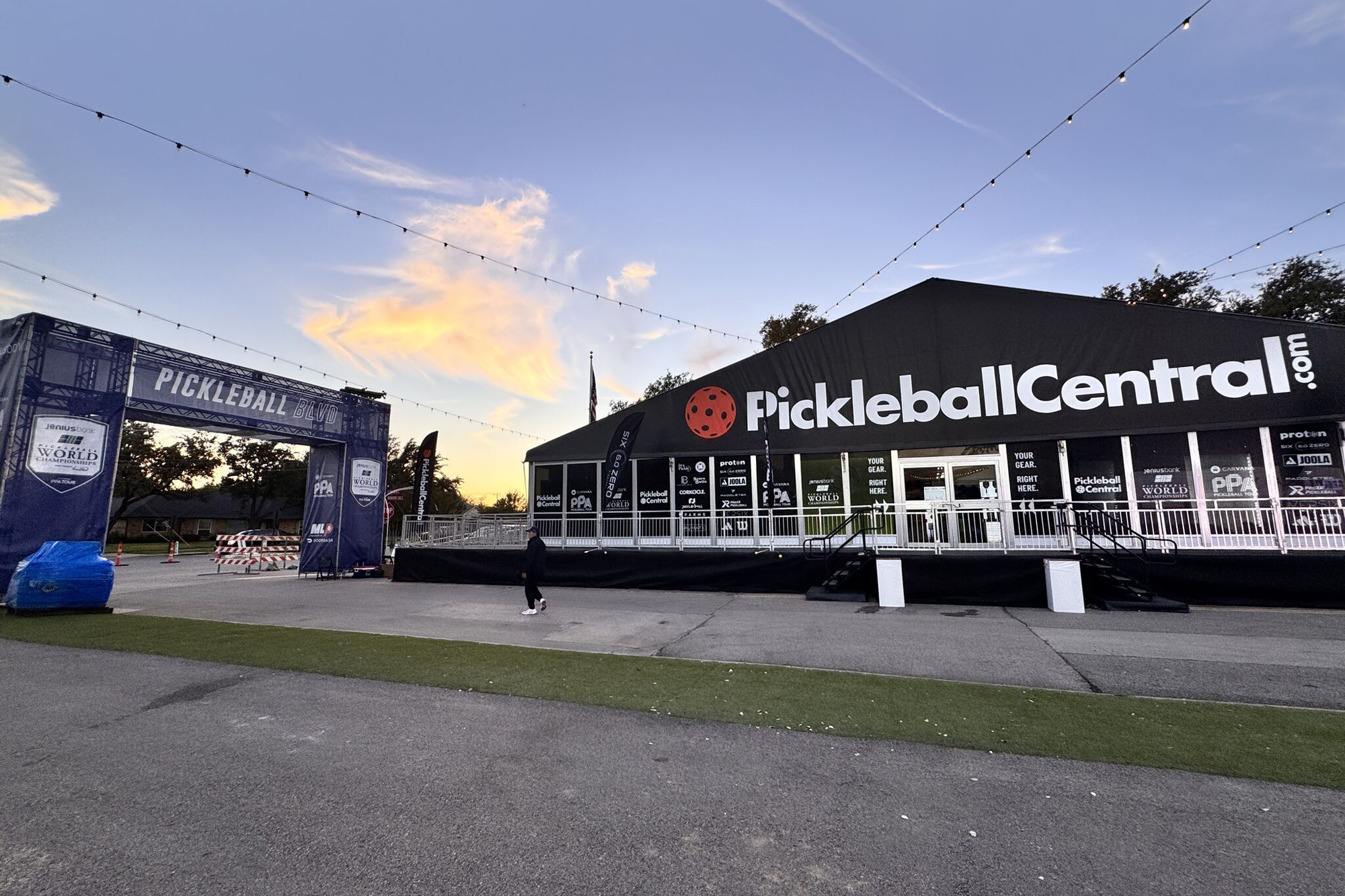
CARL: Pickleball Central has grown from an online superstore into a major retail presence at professional tournaments. What criteria do you use when deciding which events to sponsor or partner with, including the PPA, APP, MLP, US Open and other major events?
Nicole: Our traveling Pickleball Central retail experience is built around brand partnerships and sponsorships. It operates through a sponsorship-supported, pay-to-participate model, with arrangements that can involve brands, the tour, and Pickleball Central. Importantly, every product we carry is assessed on value and relevancy to pickleball players. Our customers have trusted us for 20 years to carry quality products from brands that are investing in the sport they love, and this is a lens we apply to all of our partnerships.
Once a partnership is established, the real work begins. It isn’t simply about placing products in a store. It’s about bringing each brand’s identity to life and connecting it to the professional athletes, fans, and wider pickleball community. Presentation, product availability, and the overall shopping experience all matter.
Behind the scenes, there is an enormous amount of coordination. With tournaments often running back-to-back, our teams manage inventory, signage, merchandising, logistics, and brand presentation to ensure that each event feels fresh and well executed.
For me, a successful tournament partnership is about more than visibility. It creates an experience that strengthens the connection between the brand, the athlete, and the consumer.
CARL: With the influx of indoor pickleball facilities, you’ve partnered with franchises like Dill Dinkers to establish and operate their pro shops. How have these partnerships performed? Many facilities are hesitant to add food and beverage or retail operations. What have you learned about sales at these locations?
Nicole: Our partnerships with indoor facilities, including franchise groups like Dill Dinkers, have created exciting opportunities. In some cases, we’ve taken over pro shops that clubs previously operated themselves. In others, we’ve partnered with new facilities from the beginning.
The beauty of our model is that clubs don’t have to make a significant upfront investment in product inventory. We provide the assortment and merchandising support, while the club participates through a revenue-sharing arrangement. Members and visitors gain access to paddles, demos, footwear, and accessories without the club having to purchase and manage that inventory on its own.
With new products and paddle technology evolving so quickly, staying current can be challenging for individual operators. Our goal is to reduce that complexity so they can focus on their members.
Has everything been seamless? Absolutely not! Scaling from five or ten locations to approximately 80 brings growing pains. Each stage teaches us about infrastructure, communication, execution, and support. Listening to partners, including Dill Dinkers, and adjusting along the way is essential.
As for retail or food and beverage, there is no one-size-fits-all answer. I’ve seen a four-court facility outperform a 16-court club in retail sales, and larger facilities deliver exceptional results. A restaurant isn’t automatically successful simply because it’s inside a club. Operators should listen to their members, understand their market, assess their own expertise, and choose partners carefully. The number of courts doesn’t determine the success of an additional revenue stream; the local customer and the execution do.
CARL: How can a new paddle, apparel or accessory company work with Pickleball Central to get its products into your online store or establish a presence at tournaments and facilities?
Nicole: This is a topic I recently addressed at the World Pickleball Expo in my presentation, From Idea to Retail Shelf. There are several paths, depending on where a brand is in its journey.
For emerging brands, sponsorship is often one of the strongest entry points, particularly through professional tournaments, teams, and players. It can create visibility, introduce products to consumers, and help build credibility. Tournament sponsorship is a primary avenue for beginning a retail relationship, although it doesn’t guarantee placement across every channel.
Other possibilities include limited placements, trials, and potentially broader distribution as a product demonstrates success. Established brands with proven demand may also approach the retail team directly without an initial sponsorship relationship.
A recognized brand and a brand-new introduction bring different levels of consumer trust, so their routes to retail may look different. My advice is to think beyond simply getting onto a shelf. Build awareness, demonstrate quality, and give customers a reason to choose you. Getting onto the retail shelf is an opportunity; creating staying power is the real achievement.
CARL: What are the hottest-selling products online today? With paddle prices ranging from under $100 to $350 or $400, how much does price influence purchasing decisions?
Nicole: It depends on the player and what they want from their game. New players may not be ready to invest $300 in a paddle, but they still want quality equipment that helps them improve. Strong options in the $100–$200 range are just as important as premium offerings.
You don’t have to be a championship-level player to appreciate a $300 paddle! Passionate recreational players may want to use the same equipment as their favorite professionals. Others enjoy discovering emerging brands that offer interesting technology at more accessible prices.
Innovation takes many forms: quieter designs, foam-core construction, and different approaches to power, speed, and control. Price matters, but it doesn’t tell the whole story. Players should consider where they want to improve and, when possible, talk with a knowledgeable equipment specialist or instructor and try paddles before buying.
The hottest paddle on the market isn’t necessarily the best paddle for you. The best choice is the one that complements your game and gives you confidence on the court.
CARL: How important have accessories become as the pickleball industry grows, particularly with the increasing competition in footwear?
Nicole: Accessories will always have an important role in pickleball retail. They’re often affordable purchases that let players personalize or enhance their equipment, whether through a new grip, added paddle weight, or edge protection.
Footwear has become more of a necessity, while pickleball-specific apparel is often a preference. Once people play regularly, they recognize how much quick stops and lateral movement demand from their shoes. Quality court footwear offers stability, support, and traction. Apparel is different: with so much athletic and lifestyle clothing available, players already have many options suitable for the court.
What’s fascinating is how differently these categories perform by location. I’ve seen pro shops where footwear and apparel together represent 20–25% of business, and others where the combined share is as low as 2%. Those differences are a reminder that assortment decisions must reflect the habits and preferences of each club’s members rather than a national trend alone.
CARL: New pickleball brands are entering the ball market, offering recycled materials, indoor and outdoor designs, and a growing range of colors. How has increased competition affected pricing, and which ball colors and brands are leading sales today?
Nicole: I expect we’ll continue seeing new ball brands and innovations, as in any growing sport. But it’s important to look beyond price to quality, consistency, durability, and a manufacturer’s track record. Not all balls perform or last the same way.
A facility buying 100 or more balls for a ball machine has very different priorities from friends purchasing six or twelve for occasional games. Ball construction, hardness, speed, and indoor or outdoor conditions also affect what works best. A faster, harder ball may suit one player but feel less forgiving to another.
Traditional yellow remains, in my experience, the most familiar and popular choice, although other colors can be fun and meaningful, such as pink balls for breast cancer awareness events. Competition also gives shoppers more options and promotional opportunities, and Pickleball Central offers ball specials throughout the year.
The best value isn’t always the lowest price per ball. It’s a ball that performs consistently, lasts, and suits its intended use.
CARL: Pickleball is expanding rapidly around the world. What percentage of Pickleball Central’s sales comes from overseas markets, and how are you working with manufacturers to address counterfeit products?
Nicole: It’s incredibly exciting to watch pickleball grow internationally. We’re seeing enthusiasm across Asia, Europe, and other emerging markets, and it’s wonderful to see organizations such as the PPA expand their international presence.
Pickleball Central has developed relationships with international businesses and partners across a variety of product categories. While I can’t speak to a specific percentage of overseas sales, I think the broader story is the value of relationships that support growth beyond the United States. Some international businesses have also looked to us for insights as they explore developing pickleball in their own markets.
Authenticity and consumer trust are important as the industry expands. Many manufacturers have measures such as product identification and authentication systems, and those brand-protection efforts are primarily led by the manufacturers themselves.
International growth is about more than products crossing borders. It’s about exchanging knowledge, building trusted partnerships, and helping create a strong foundation for the sport wherever it’s played.

The Future of Pickleball Retail
CARL: Looking ahead three to five years, what is your vision for Pickleball Central and the retail industry? How do you see product innovation, online sales and partnerships with indoor facilities, municipalities and parks and recreation departments evolving?
Nicole: That’s a big question, particularly given how dramatically pickleball has evolved in the last few years. Predicting the next five is difficult. I believe the businesses that succeed will stay flexible, innovative, and ready to pivot as the sport develops.
I expect continued advancements in paddles, footwear, and accessories. Offering new products matters, but so does helping consumers understand the technology and what it means for their game.
I’m especially passionate about developing our pro shop partnerships. There is tremendous opportunity to strengthen the connection between clubs, members, and equipment. That means improving inventory management, automated replenishment, and point-of-sale systems while working toward a more seamless online and in-store experience. A truly connected omnichannel approach is an exciting longer-term aspiration, not something I would suggest is already complete.
Partnership opportunities may evolve as indoor and outdoor facilities expand. Club operators, municipalities, and parks and recreation departments can draw on growing experience and market information to make thoughtful decisions for their communities.
If the last few years have taught us anything, it’s that we can’t build tomorrow’s pickleball business using only yesterday’s playbook. We need to stay open-minded, listen, and build the support systems that allow us to grow responsibly. Above all, behind the growth are people who simply love playing pickleball. Keeping that passion at the center is what makes this industry special. ●
About Carl Foster
Carl Foster is the Chairman of the World Pickleball Conference and the CEO of Foster Events Group, LLC, where he specializes in the production and management of high-profile sports and entertainment events. With over 50 years of experience in broadcasting, fundraising, and event leadership, he produces Inside WORLD Pickleball and serves as a lead moderator for industry summits. He is a central figure in the professionalization of pickleball, connecting technology experts, organizational leadership, and the player community to elevate the sport’s presence on a global scale.

Read the full magazine issue! Click below, then tap Full Screen for the best reading experience.
