
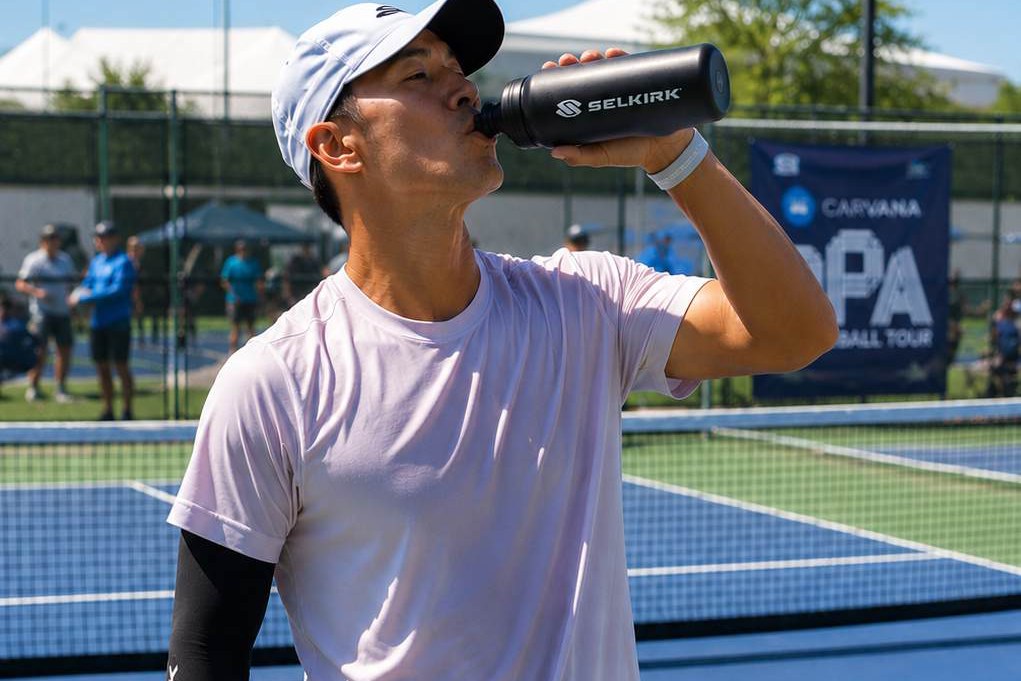
Hydration Mistakes That Hurt Performance
By Michael Falco • June 3, 2026 • 6 min read
MOST PICKLEBALL PLAYERS understand the importance of staying hydrated. Water bottles are lined up along fences, tucked into paddle bags, and carried from court to court during tournaments and open play sessions.
Yet despite drinking plenty of water, many players still experience fatigue, muscle cramps, headaches, dizziness, sluggishness, and a noticeable decline in performance as matches progress.
The problem is not always dehydration. Sometimes it is how players are hydrating. For many athletes, especially those playing multiple hours in the heat, water alone may not be enough to replace everything the body loses during exercise.
What Happens When You Sweat
When players sweat, they lose far more than water. Sweat contains important electrolytes such as sodium, potassium, magnesium, and calcium. These minerals play essential roles in muscle contractions, nerve signaling, fluid balance, energy production, and overall athletic performance.
As playing time increases, electrolyte losses increase as well. Many players attempt to replace those losses by simply drinking more water. While that strategy helps replace fluids, it does not necessarily restore the minerals being depleted. Over time, that imbalance can contribute to fatigue, cramping, reduced endurance, slower reaction times, and diminished mental focus.
Tournament Hydration Is Different
Many recreational players can get through a casual 60- or 90-minute session with little more than a bottle of water. Tournament players often face a different challenge.
A player may compete in four, five, six, or even more matches over the course of a day. Some tournaments require athletes to sit for extended periods between matches before suddenly returning to intense activity. Others involve competing under direct sun on court surfaces that radiate additional heat and increase sweat loss.
In these situations, hydration becomes a full-day strategy rather than something addressed between games. Players who wait until they feel thirsty are often already behind. The most successful tournament players understand that hydration begins well before the first serve and continues throughout the day.
The Problem With Waiting Until You’re Thirsty
One of the most common hydration mistakes occurs before a player even steps onto the court. Many people wait until they feel thirsty before they begin drinking. Unfortunately, thirst is often a delayed signal. By the time thirst appears, the body may already be experiencing the early stages of dehydration.
Players who begin matches slightly dehydrated often spend the rest of the session trying to catch up. A much more effective approach is to begin hydrating several hours before play starts and maintain consistent fluid intake throughout the day. The body generally performs better when hydration levels are maintained steadily rather than corrected at the last minute.
Why Cramping Is Not Always About Fitness
Many players assume muscle cramps occur because they are tired or out of shape. While conditioning certainly plays a role, electrolyte depletion is frequently part of the equation.
When sodium, potassium, and magnesium levels begin to drop, muscles may struggle to contract and relax efficiently. The result can be calf cramps, hamstring tightness, foot cramps, muscle fatigue, or reduced explosiveness later.
Many players respond by drinking more water. In some situations, however, the body may need electrolytes just as much as it needs additional fluids. Understanding the difference can help players avoid performance declines that often appear late in long playing sessions.
When Too Much Water Becomes a Problem
Most athletes focus on not drinking enough water. Far fewer consider what happens when they drink too much without replacing electrolytes.
During extended play in hot conditions, excessive water consumption can dilute sodium levels in the body. While severe cases are relatively uncommon, many players experience milder forms of electrolyte imbalance without realizing it. They continue drinking water yet still feel tired, sluggish, weak, or prone to cramping.
In those situations, the problem may not be a lack of fluid. The issue may be that the body is missing the minerals necessary to properly utilize and retain that fluid.
Why Electrolytes Matter
Electrolytes are critical to athletic performance. Sodium helps regulate fluid balance and allows the body to retain water effectively. Potassium supports proper muscle contractions and nerve function. Magnesium contributes to energy production and muscle relaxation, while calcium plays an important role in muscle movement and communication between nerves.
Without adequate electrolyte replacement, hydration becomes significantly less effective. This is why many athletes incorporate electrolyte drinks, powders, tablets, or supplements into their training and competition routines. The goal is not to replace water with sports drinks, but rather to create a healthier balance between fluid intake and electrolyte replenishment.
Not Every Player Sweats the Same
One reason hydration can be confusing is that every athlete loses fluids differently. Some players are heavy sweaters who lose large amounts of sodium during exercise. Others sweat less but still become dehydrated because they are not consistently replacing fluids throughout the day.
Environmental conditions also matter. A humid Florida day creates very different hydration demands than a cool morning in Colorado or an indoor session in the Pacific Northwest. Court surfaces, sunlight, humidity, match intensity, and individual physiology all influence hydration needs.
The most effective hydration strategy is rarely one-size-fits-all. Players should pay attention to how their bodies respond before, during, and after play and make adjustments accordingly.
Hot Weather Changes the Equation
A cool morning recreational game places very different demands on the body than a summer tournament played under intense heat and humidity. Temperature, court surface, match length, sweat rate, and overall exertion all influence hydration needs.
Some athletes lose significantly more sodium through sweat than others. These players often notice salt stains on clothing, frequent muscle cramps, or persistent fatigue during long playing sessions. For them, electrolyte replacement may be even more important than it is for the average player.
As temperatures rise, players should pay increasing attention not only to how much they drink but also to what they are replacing.
The Pickleball Player’s Hydration Window
Many athletes think about hydration only while they are playing. In reality, hydration begins hours before stepping onto the court and continues long after the final point.
Consistent hydration throughout the day gives the body time to absorb and utilize fluids effectively. Chugging a large bottle of water immediately before a match is rarely as effective as maintaining hydration over several hours.
Recovery hydration is equally important. Replacing fluids and electrolytes after play helps reduce fatigue, supports muscle recovery, and prepares the body for the next practice session, tournament match, or day of competition.
Signs Your Hydration Strategy Needs Work
Hydration problems do not always begin with extreme thirst. Many of the early warning signs are subtle and easy to overlook. Headaches, dizziness, fatigue, slower reaction times, difficulty concentrating, muscle cramps, unusual irritability, and late-match performance declines can all indicate hydration issues.
Recovery can provide clues as well. Players who regularly experience lingering fatigue, post-match headaches, or excessive muscle soreness may benefit from looking at their hydration habits before, during, and after play.
Smarter Hydration for Pickleball Players
Successful hydration begins well before the first serve and continues long after the final point has been played. Consistent fluid intake throughout the day provides a stronger foundation than trying to rapidly hydrate moments before stepping onto the court.
For longer playing sessions, tournaments, or matches in hot weather, electrolyte supplementation may help maintain proper fluid balance and support performance. Nutrition also contributes to hydration. Foods such as watermelon, oranges, strawberries, grapes, and cucumbers contain significant amounts of water while supplying valuable vitamins and minerals.
Players do not need an elaborate hydration plan to improve performance. Often, small adjustments such as drinking earlier, consuming electrolytes during extended play, and paying attention to recovery can make a meaningful difference.
The Bottom Line
Hydration is about much more than simply drinking water. For many pickleball players, especially those competing in tournaments, playing multiple matches, or spending hours on the court in challenging conditions, proper hydration requires replacing both fluids and electrolytes.
Water remains essential, but it is only part of the equation. The players who continue performing at a high level deep into matches are often the ones who understand that hydration begins before play starts, continues throughout competition, and remains a priority during recovery. When it comes to maximizing performance, endurance, and overall health, what you drink can be just as important as how much you drink.
Michael Falco is a Certified Master Trainer and ISSA Personal Trainer, an ISSA Nutritionist, and an FWI Certified Life Coach. He trains clients at LA Fitness in North Wales, PA, and writes the Health & Wellness column for The Pickleball Weekly.

Read the full magazine issue! This story appeared in the June 3, 2026 issue of The Pickleball Weekly.
